.jpg)
January 24, 2026
Digitalization in the Maritime Industry: Key Trends Reshaping Ship Management

January 24, 2026
Digitalization in shipping isn’t one “big bang” project anymore. It’s a steady shift from paper + disconnected tools to connected operations, where ships generate usable data continuously, shore teams act on it quickly, and AI turns that data into decisions—faster maintenance, tighter fuel control, fewer surprises, and smoother coordination with ports.
For fleet managers, this shift is practical—not theoretical. It changes how you:
And one signal is clear: vessels are increasingly treated as “floating offices” that rely on always-on software and constant data exchange.
This blog breaks down the key trends reshaping ship management—with real use cases and data—then gives a practical roadmap to capture the benefits of AI in maritime operations.
Three forces pushed the industry from “digital experiments” to “digital operations”:
If you zoom out, digitalization is basically a new stack:
The reason this matters: fleets that build a clean stack can add high-value use cases quickly, without rewriting everything each time. A major enabler here is data standardization. ISO standards such as ISO 19847 / ISO 19848 focus on shipboard data servers and structured data exchange, helping systems talk to each other without fragile custom integrations.
Connectivity is no longer just crew welfare or email. It’s a production dependency.
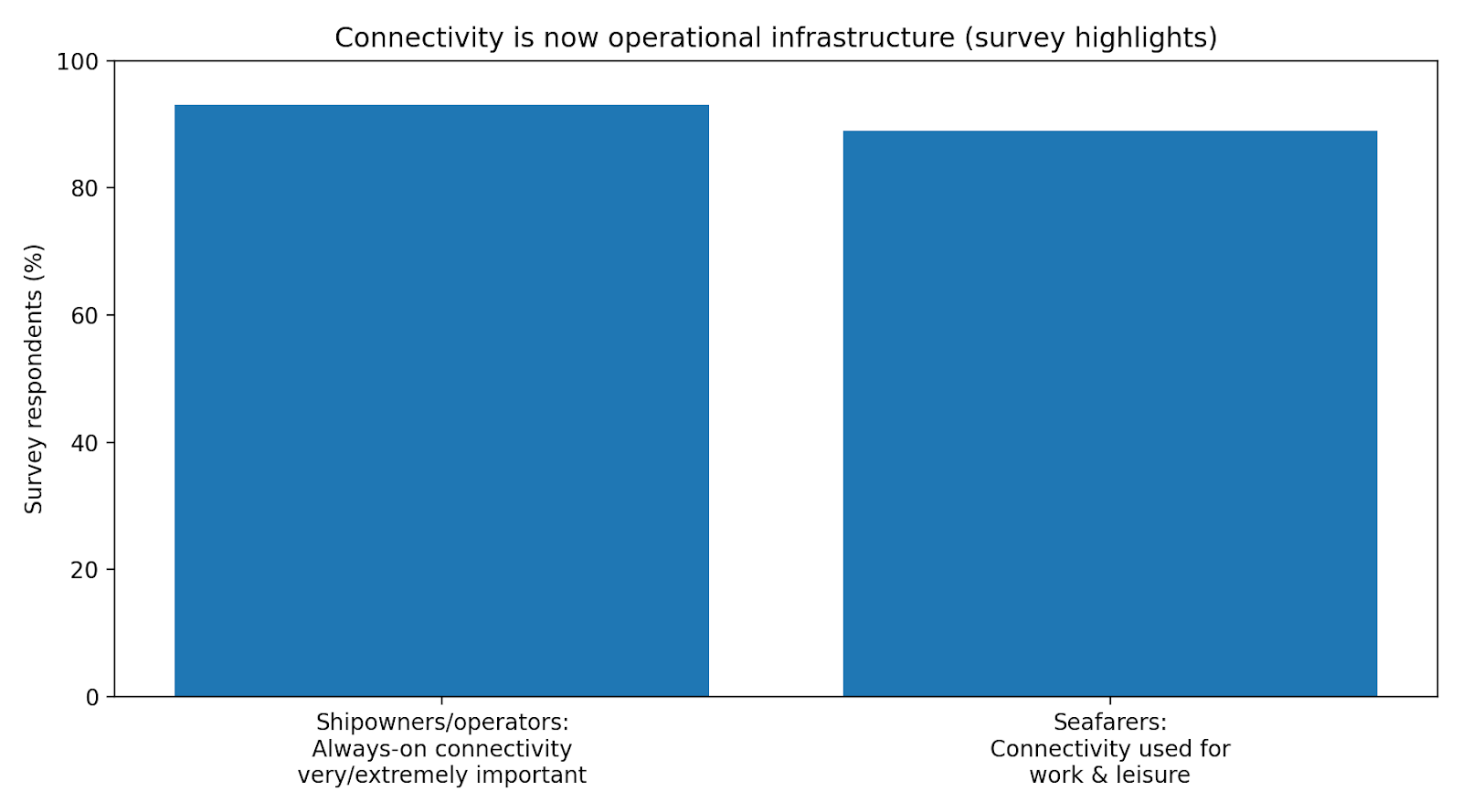
Inmarsat’s Digital Wave research highlights that 93% of shipowners/operators rated always-on connectivity as very or extremely important, reflecting how software, remote support, and collaboration are becoming core to operations.
On the crew side, Inmarsat reported 89% of seafarers rely on connectivity for both work and leisure.
This matters to ship management because it enables:
Operational takeaway for fleet managers:
Treat connectivity like a critical system: define minimum uptime, redundancy, bandwidth allocation policies, onboard network segmentation, and vendor SLAs—because every digital initiative depends on it.
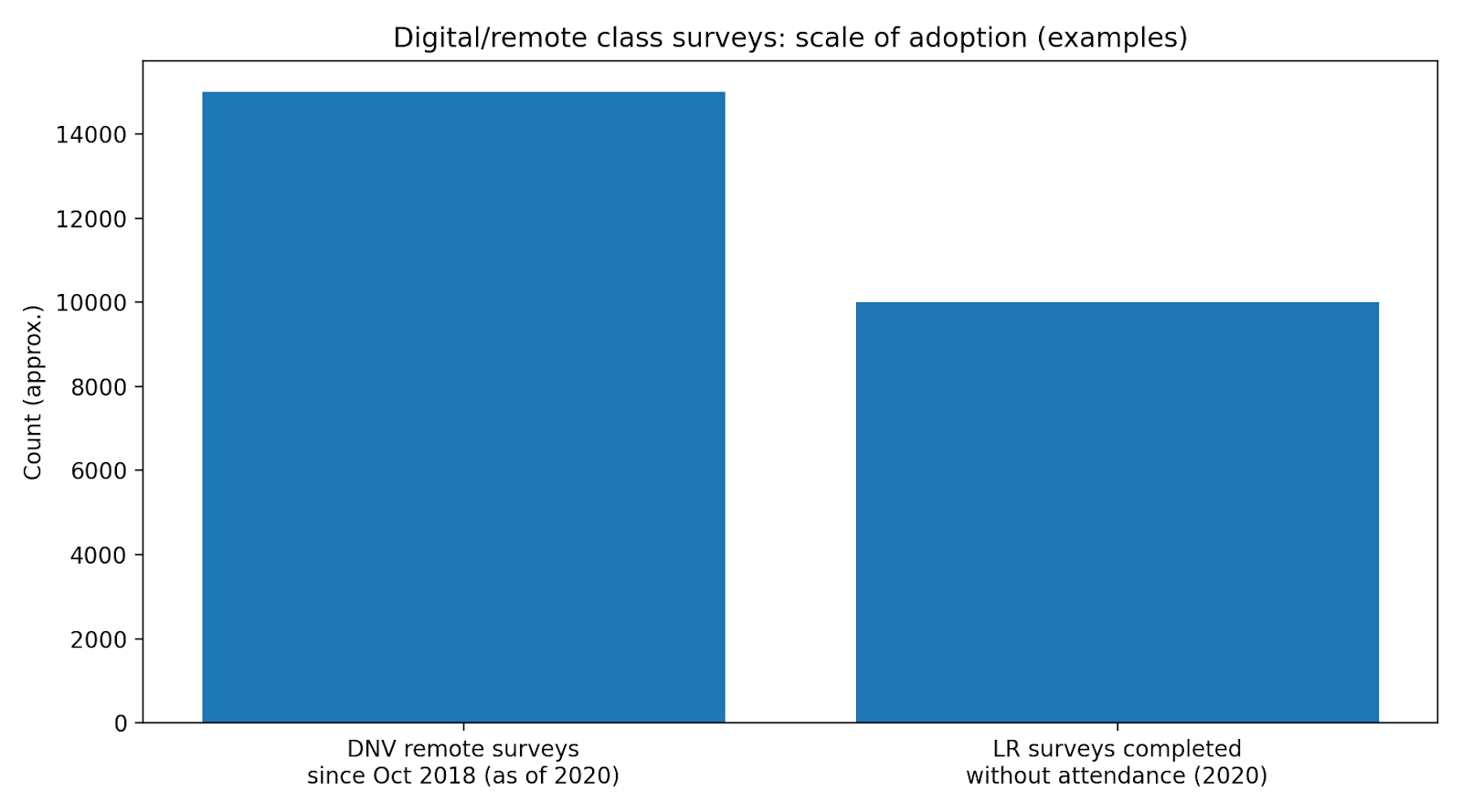
A concrete “digitalization win” already proven at industry scale is remote surveys.
What this changes in ship management:
Remote surveys push fleets to maintain better digital records, structured evidence (photos/videos), and consistent onboard processes—because the “proof” is digital.
Fleet manager move:
Standardize a “remote-ready” package per vessel type: bandwidth readiness, camera kits, evidence checklists, document templates, and onboard training.
Ports are also digitizing—and that directly impacts ship management workload.
The IMO has pushed electronic data exchange for arrival/stay/departure formalities, and from 1 January 2024, a Maritime Single Window is mandatory in all ports (per IMO messaging on the topic), enabling data submission through one portal to reduce duplication.
Why fleet managers should care:
But it only works smoothly if the ship’s operational data is clean and structured. Otherwise digital reporting just becomes “bad data sent faster.”
Fleet manager move:
Link port call workflows with onboard logs and voyage systems; define data ownership (who confirms what) and a version-control approach for port submissions.
Maintenance is one of the highest-leverage areas for AI because:
AI-enabled predictive/condition-based maintenance typically uses:
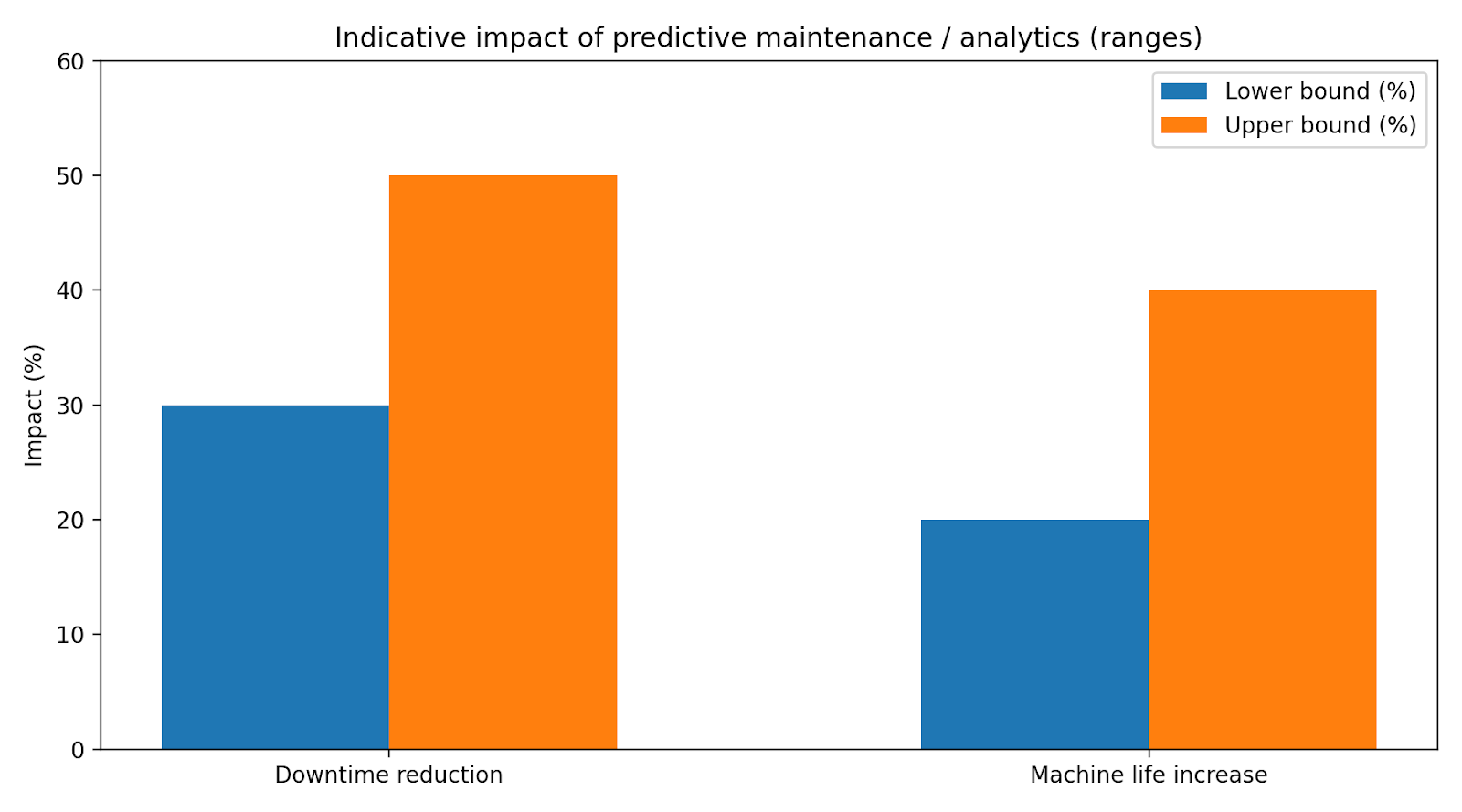
While results vary by asset and data quality, McKinsey has cited predictive maintenance ranges such as up to ~50% downtime reduction and up to ~40% increase in equipment life in suitable contexts.
Fleet managers typically see early wins in:
Academic and industry literature includes shipping-focused predictive maintenance models using real-time monitoring data and ML techniques for vessel machinery.
Fleet manager move:
Start with 2–3 equipment families where you have:
Even when sensor data exists, a huge chunk of delay comes from human search time:
Digitalization increasingly means creating a single operational knowledge layer:
This doesn’t remove the engineer—it removes the scavenger hunt.
What AI changes:
Instead of “search and read,” teams can ask:
Fleet manager move:
Treat troubleshooting workflows like a product: define standard question templates, capture outcomes, and enforce close-out notes so the system learns.
A digital twin in maritime is typically a living model of the vessel (or subsystem) that combines:
DNV has described using digital twin methodologies for hull condition monitoring combined with sensor and wave/position monitoring to enhance predictive/preventive maintenance value.
Cargill has publicly stated it uses advanced digital tools, including voyage optimization, to create digital twins of vessels for better speed/route planning to reduce fuel consumption and emissions (in the context of broader sustainability efforts).
Related industry reporting notes partnerships aimed at optimization at significant fleet scale (e.g., software optimization contracts).
What this changes in ship management:
Fleet manager move:
Avoid “twin for everything.” Build twins for outcomes:
Voyage optimization used to mean: weather routing + captain’s experience. Now it’s a continuous loop:
A Maritime Executive summary of a UCL/UMAS study reported potential fuel savings from just-in-time arrival as approximately:
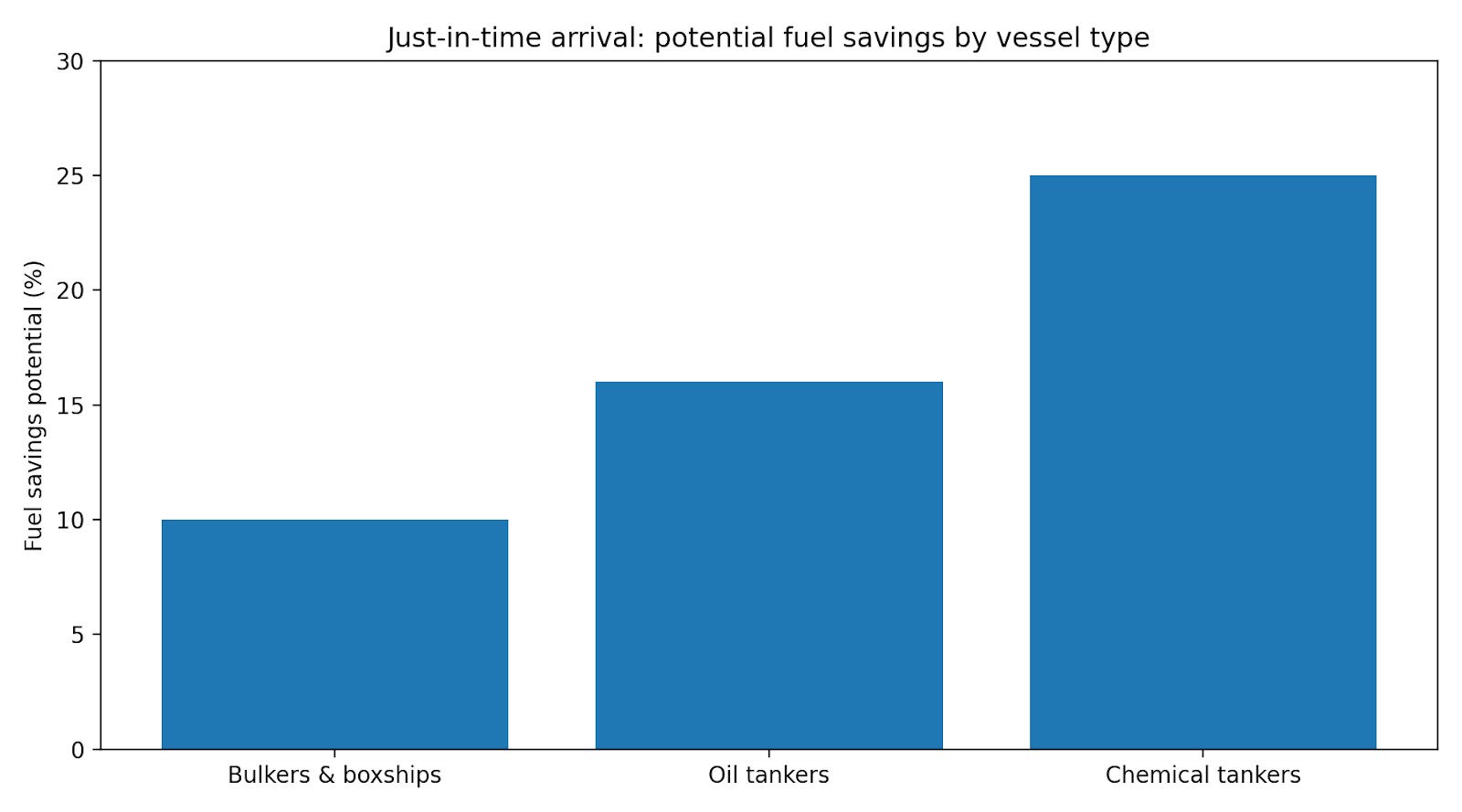
A 2024 MDPI paper reported up to ~5% higher fuel efficiency achieved with trim optimization (context-dependent).
This is powerful because it’s often:
Fleet manager move:
Turn optimization into a routine:
As ships digitize, cyber exposure rises—because more systems connect ship-to-shore, and because operational technology (OT) is increasingly networked with IT.
DNV’s Maritime Cyber Priority research (2024/25 edition) highlights the industry tension: 61% of maritime professionals said the sector should accept increased cyber exposure from digitalization if it enables innovation/new tech.
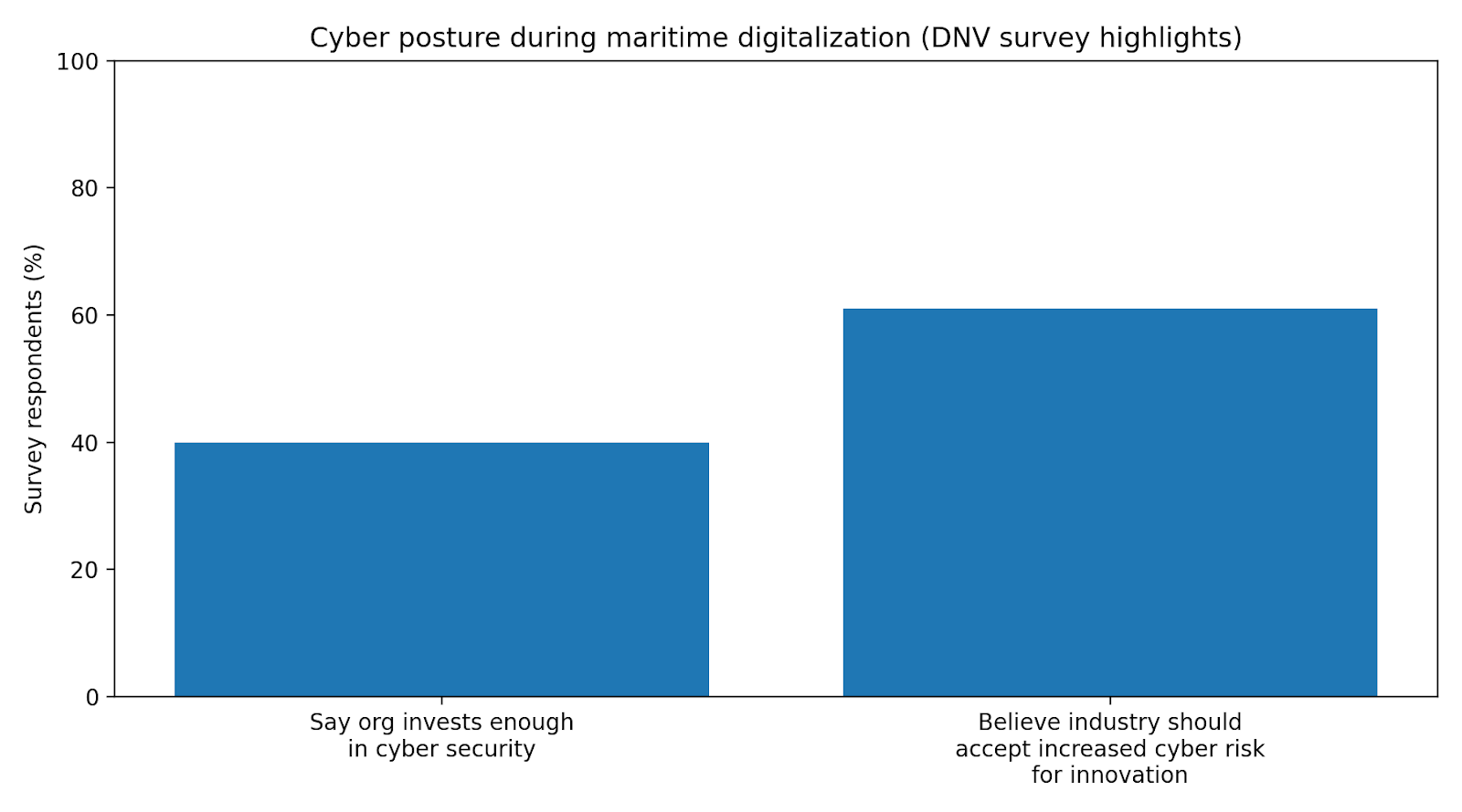
Meanwhile, IMO and industry bodies provide cyber risk management guidance intended to be incorporated into existing management processes.
Fleet manager move:
Convert cyber from “policy PDFs” into operations:
Even without changing fuels, digital optimization can create meaningful gains by reducing waste: waiting, inefficient routing, poor trim, reactive maintenance, and inconsistent operations.
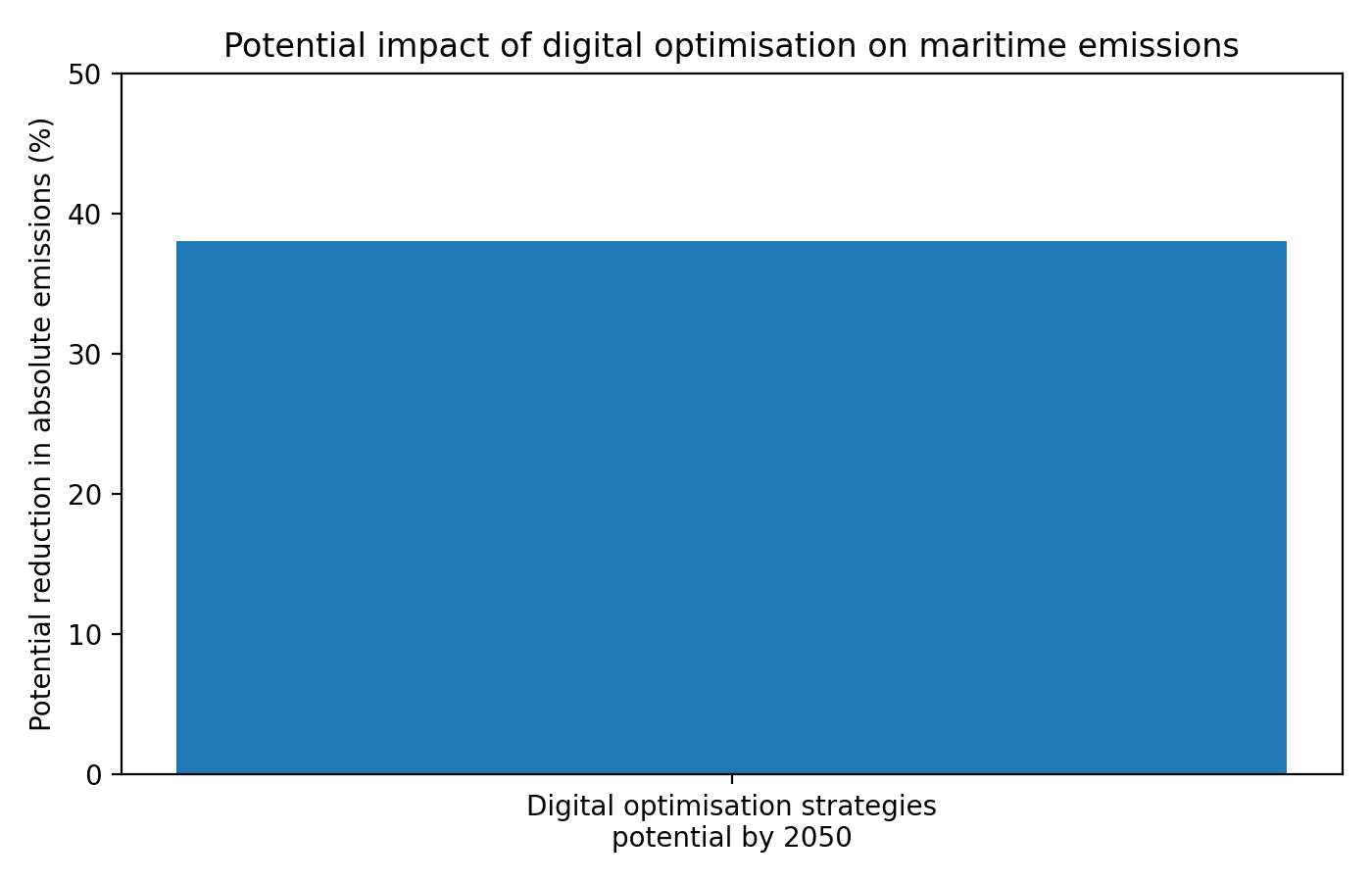
Thetius/Inmarsat research has stated that digital decarbonising/optimisation strategies alone could achieve up to ~38% reduction in absolute emissions by 2050 (as part of a broader decarbonisation toolkit discussion).
Fleet manager move:
Treat digital energy efficiency as a portfolio:
AI becomes valuable when it reliably reduces time, variance, and uncertainty. For fleet managers, the most practical “AI value buckets” look like this:
Outcome: less time searching; more time doing.
Outcome: fewer surprise failures; better spares readiness; fewer expensive disruptions.
Outcome: measurable fuel savings + tighter schedule control.
Outcome: better decisions because inputs are cleaner.
Outcome: fewer “heroic efforts,” more repeatable results.
Digitalization fails when it becomes “a platform purchase.” It succeeds when it becomes “an operating model upgrade.”
Here’s a step-by-step roadmap that works in real fleets:
Choose outcomes with clear money/time value, such as:
Minimum foundation usually includes:
If you’re dealing with messy multi-vendor data, standards like ISO 19847/19848 and a disciplined shipboard data server approach help reduce integration chaos. ISO+1
Pick:
Measure baseline KPIs before starting.
Digital tools don’t “work” until workflows change:
Scale requires:
If you can’t measure it, you can’t scale it. These are practical KPIs to track:
Reliability & maintenance
Operational performance
Process efficiency
Digital adoption
Avoid dashboards that show everything but decide nothing. Build alerting + recommended actions.
Scaling requires templates, training, governance, and ownership.
AI must understand operating modes (maneuvering vs sea passage, load, weather, fuel type, etc.). Otherwise it creates false alerts.
Cyber isn’t a phase—it’s part of the build. IMO guidance exists for maritime cyber risk management integration into existing practices.
Negotiate data ownership, export formats, and integration pathways early.
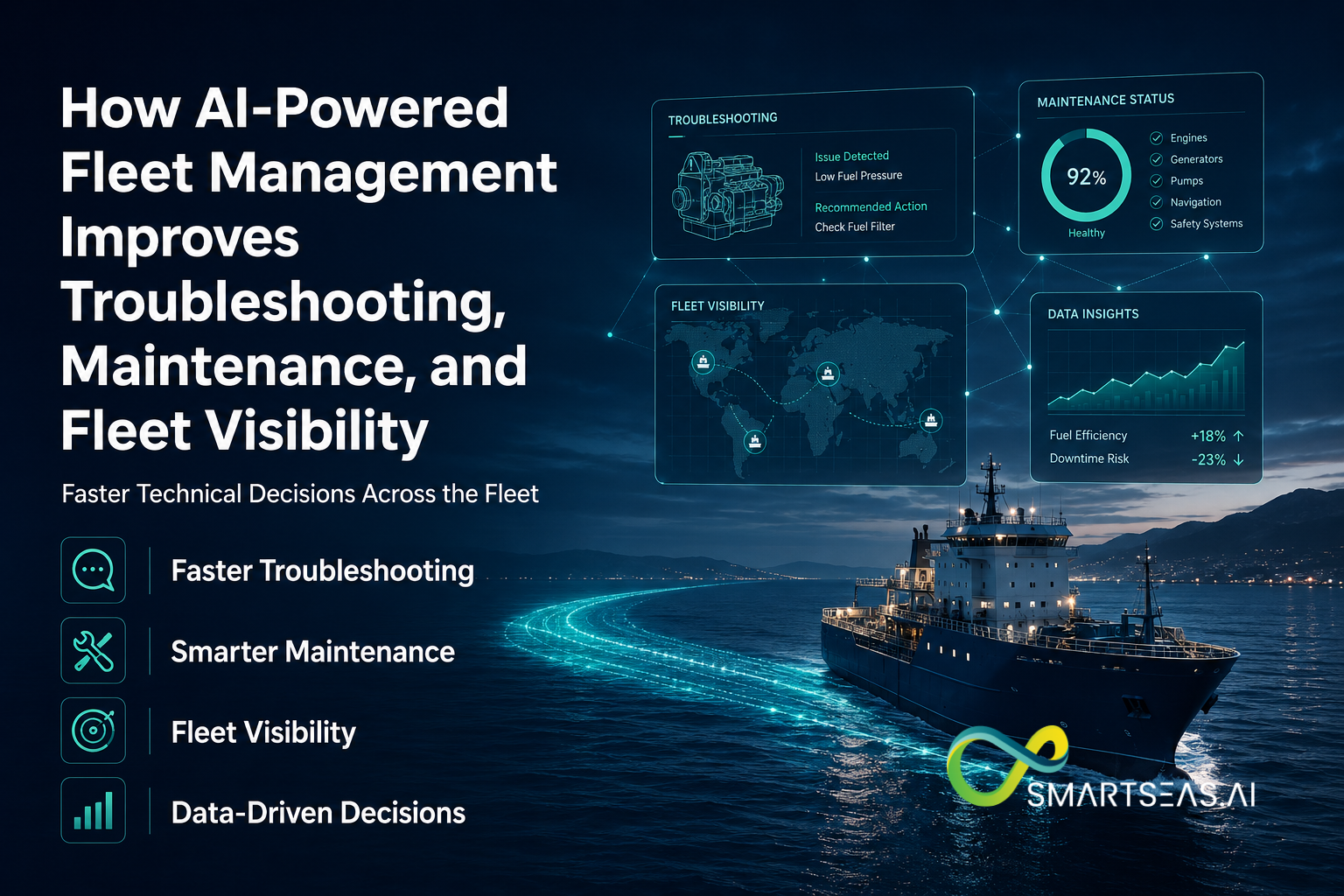
Digitalization provides the data, but SmartSeas AI provides the answers. As the world’s first real-time, AI-powered maritime troubleshooting assistant, SmartSeas AI bridges the gap between massive data streams and practical onboard execution. By unifying unstructured data—from OEM manuals and defect logs to historical incident reports—into a 360° searchable knowledge base, it empowers crews to resolve faults 90% faster and reduces fleet downtime by up to 15%. Whether it's guiding a junior engineer through a complex repair using voice commands or providing shore teams with fleet-wide predictive analytics, SmartSeas AI transforms your digital ship into a high-performance asset.
Digitalization is reshaping ship management into something closer to modern aviation operations: connected assets, standardized workflows, continuous monitoring, and decision support.
For fleet managers, the benefits aren’t abstract:
Start small but outcome-driven. Build the data foundation. Prove value with 2–3 high-impact workflows. Then scale with governance. That’s how AI becomes an operational advantage—not a pilot project.
Pick one workflow with clear ROI and low complexity: trim optimization, JIT arrival coordination, or a focused predictive maintenance pilot on a single equipment family. Trim optimization alone can show measurable efficiency gains in some contexts.
Not always. Many fleets can start with existing alarms, PMS history, and a few reliable sensor streams. But richer sensor coverage improves prediction quality and reduces false positives.
Require every dashboard to answer: “What decision does this drive today?” Use alerts + recommended actions + tracking of outcomes.
They force better digital records, evidence workflows, and consistent onboard routines—and they can reduce scheduling disruption when appropriate.
It depends on chartering terms, port coordination, and contract structures—but studies suggest meaningful potential savings when waiting time is reduced and speed profiles are optimized.
Operating model change. Tools don’t deliver value unless roles, routines, escalation rules, and accountability change with them.
Use standard templates, define data owners, implement validation rules, and align systems using recognized standards where feasible (e.g., ISO shipboard data server approaches).
As an operational KPI, not paperwork. Digitalization increases exposure, and industry guidance exists for managing maritime cyber risk.

Get Started Today
Transform the way you troubleshoot and manage maritime operations. Join the next wave of Maritime Digital Transformation with SmartSeas AI.



.svg)


.png)