.jpg)
July 20, 2026
AI for Fleet Managers: Turning Vessel Data Into Faster Technical Decisions

July 20, 2026
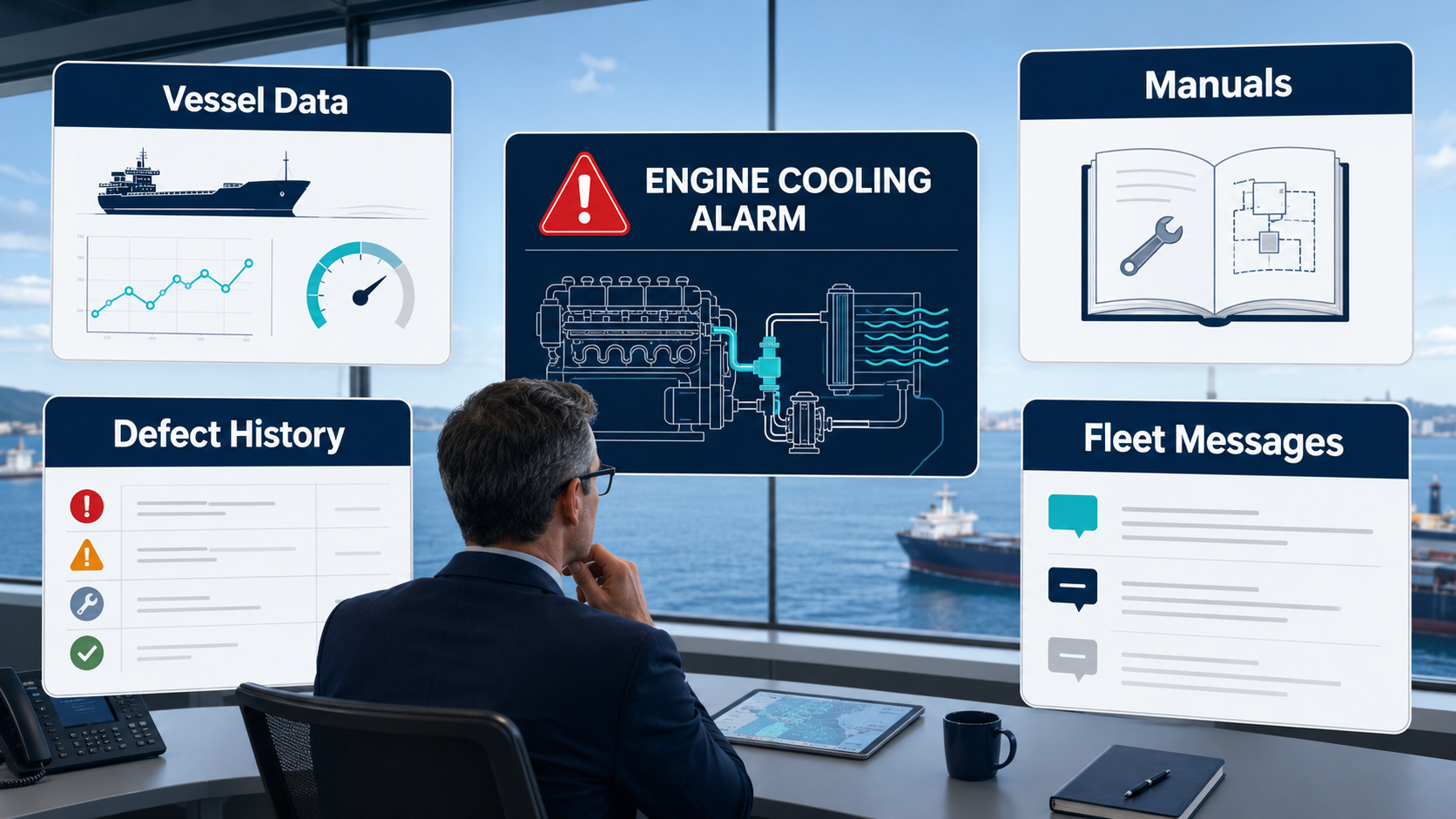
A vessel reports an auxiliary engine cooling-water alarm shortly before departure. The crew searches manuals, the superintendent checks previous defects, and procurement reviews spare availability.
AI for fleet managers helps connect this scattered vessel data with technical context. By bringing together manuals, maintenance records, defect history and ship-to-shore communication, AI can help teams understand the problem faster and identify the next practical action.
The goal is not to collect more data. It is to turn existing vessel information into faster, better-informed technical decisions.
Modern vessels produce large amounts of technical and operational information:
Yet fleet managers may still struggle to answer a simple question:
What should the vessel check next?
An abnormal reading may appear in the automation system. The latest maintenance task may be stored in the planned maintenance system. A similar repair may be buried in an old email thread.
The data exists, but the complete technical picture does not.
This gap between data availability and decision readiness is one of the main reasons fleet troubleshooting becomes slow.
Technical teams are under pressure to respond faster while controlling downtime, safety and operating costs.
UN Trade and Development has highlighted rising costs, route disruption and uncertainty across shipping. Allianz Commercial also continues to identify machinery damage and failure as a major category of shipping incidents.
An unresolved machinery problem can affect:
Maritime digitalization is moving towards greater data sharing and interoperability. However, connecting systems is only the first step.
Fleet managers need tools that explain what vessel data means for the technical problem in front of them.
A pressure reading of 2.1 bar is only a number.
It becomes useful when connected to:
Without this context, a dashboard may show that something is wrong without helping the fleet manager decide what to do.
This is the difference between vessel data management and fleet intelligence.
Vessel data management stores information. Fleet intelligence connects that information to an operational decision.
AI-supported technical decisions depend on several types of information.
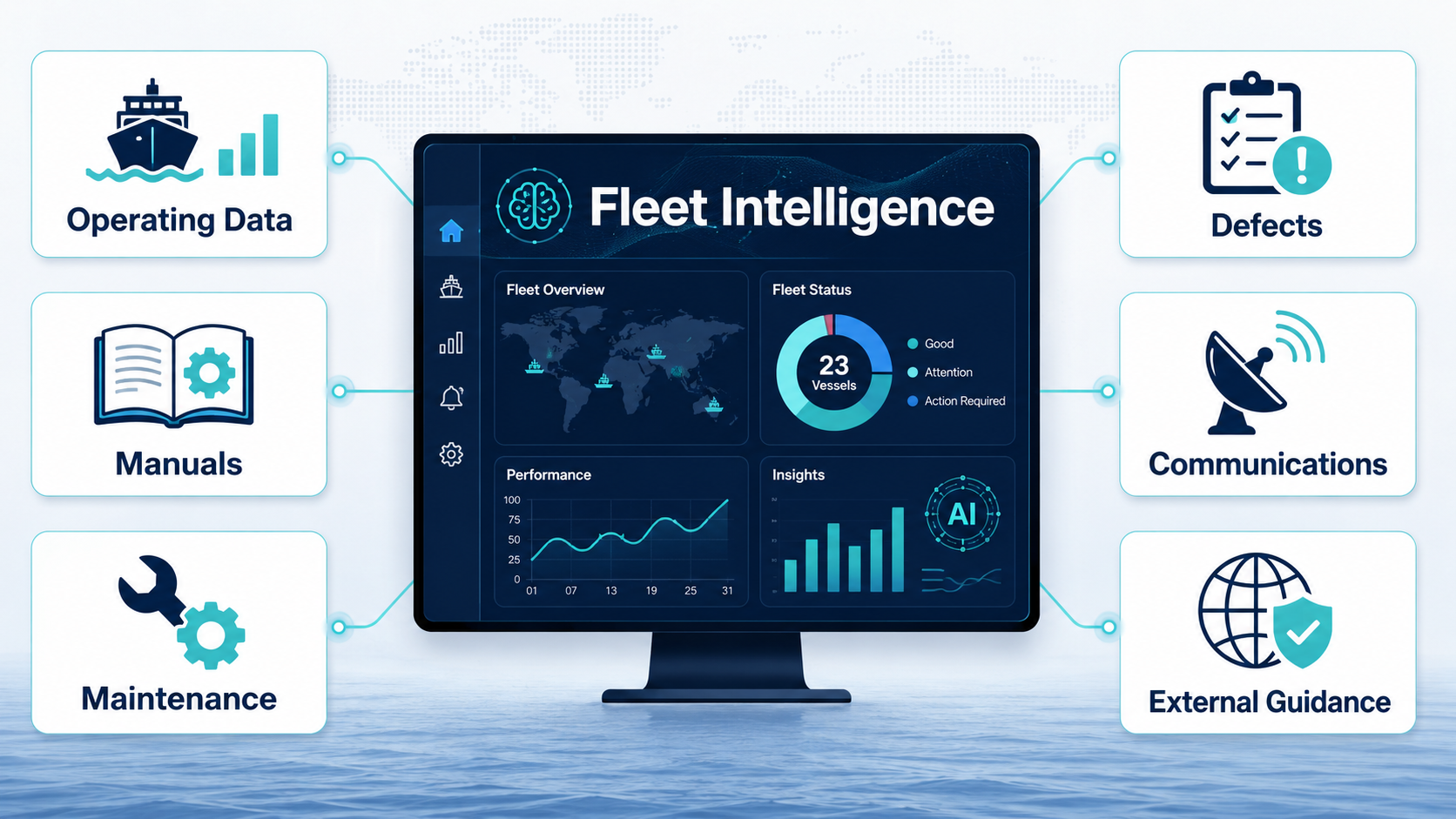
Operating data includes temperatures, pressures, vibration, motor current, alarms and equipment status.
It helps establish what is happening now. However, fleet teams must still confirm whether readings are accurate and whether instruments are functioning correctly.
Manuals contain operating limits, troubleshooting steps, diagrams, test procedures and safety warnings.
AI can help users locate the relevant section without manually searching hundreds of pages.
Maintenance records show what was serviced, which parts were changed and whether a fault returned after repair.
The quality of the AI output depends on the quality of these records. Entries such as “checked and found satisfactory” provide limited diagnostic value.
Previous defects can reveal recurring failures, unsuccessful repairs and proven corrective actions.
AI can connect related cases even when different vessels describe the same problem using different terminology.
Emails and messages often contain completed checks, OEM advice and temporary operating controls.
AI can summarize the technical timeline, while the original correspondence remains available for verification.
Some cases require OEM service letters, class guidance, safety alerts or regulatory information.
External guidance should support vessel-specific evidence rather than replace approved manuals or company procedures.
A useful fleet intelligence workflow should follow a clear sequence.
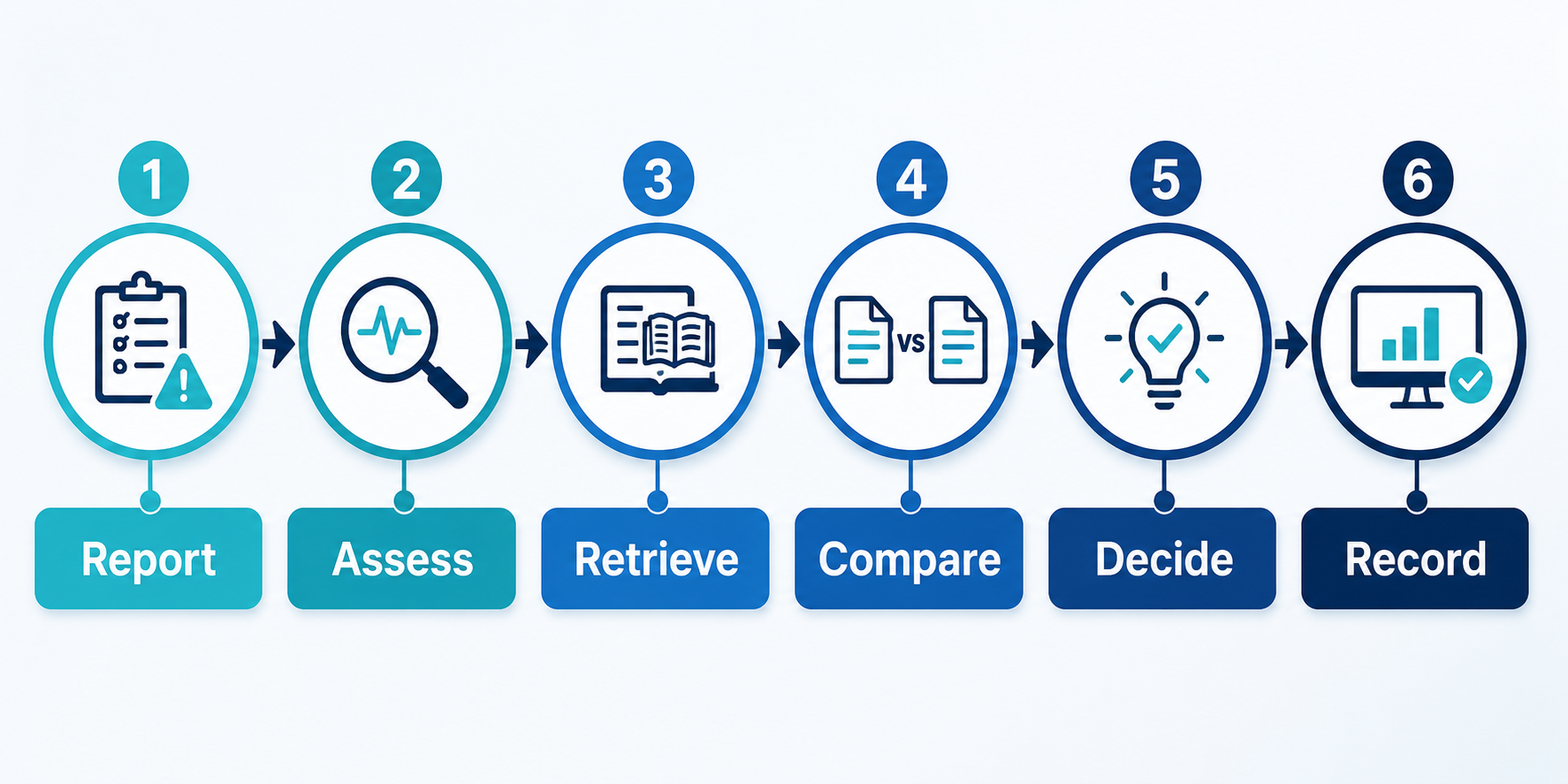
The first task is to capture:
AI can guide the crew to submit a structured report instead of sending a short message such as “pump not working.”
Before investigating the cause, the fleet manager must understand the operational consequence.
Is safety affected? Has redundancy been reduced? Can the vessel continue operating? Could further operation worsen the damage?
AI can organize procedures and previous cases, but competent ship and shore personnel must make the final decision.
The system should locate relevant:
Important recommendations should clearly show their source.
Fleet history can show whether:
This allows one vessel’s technical experience to support another vessel.
AI should not provide a long list of every possible cause.
It should help arrange checks in a practical order, beginning with safe verification before moving towards electrical, control or mechanical inspection.
The final cause, repair, parts replaced and follow-up actions should be stored.
Otherwise, valuable technical knowledge remains inside an email or with one individual.
A vessel reports that a seawater cooling pump trips after 15 minutes with a motor-overload alarm.
Under a traditional workflow, the fleet manager may need to:
Each activity may happen in a different system.
An AI-supported workflow could bring together:
The system could then help organize the investigation:
AI does not make the engineering decision. It reduces the time spent searching for information and repeating questions.
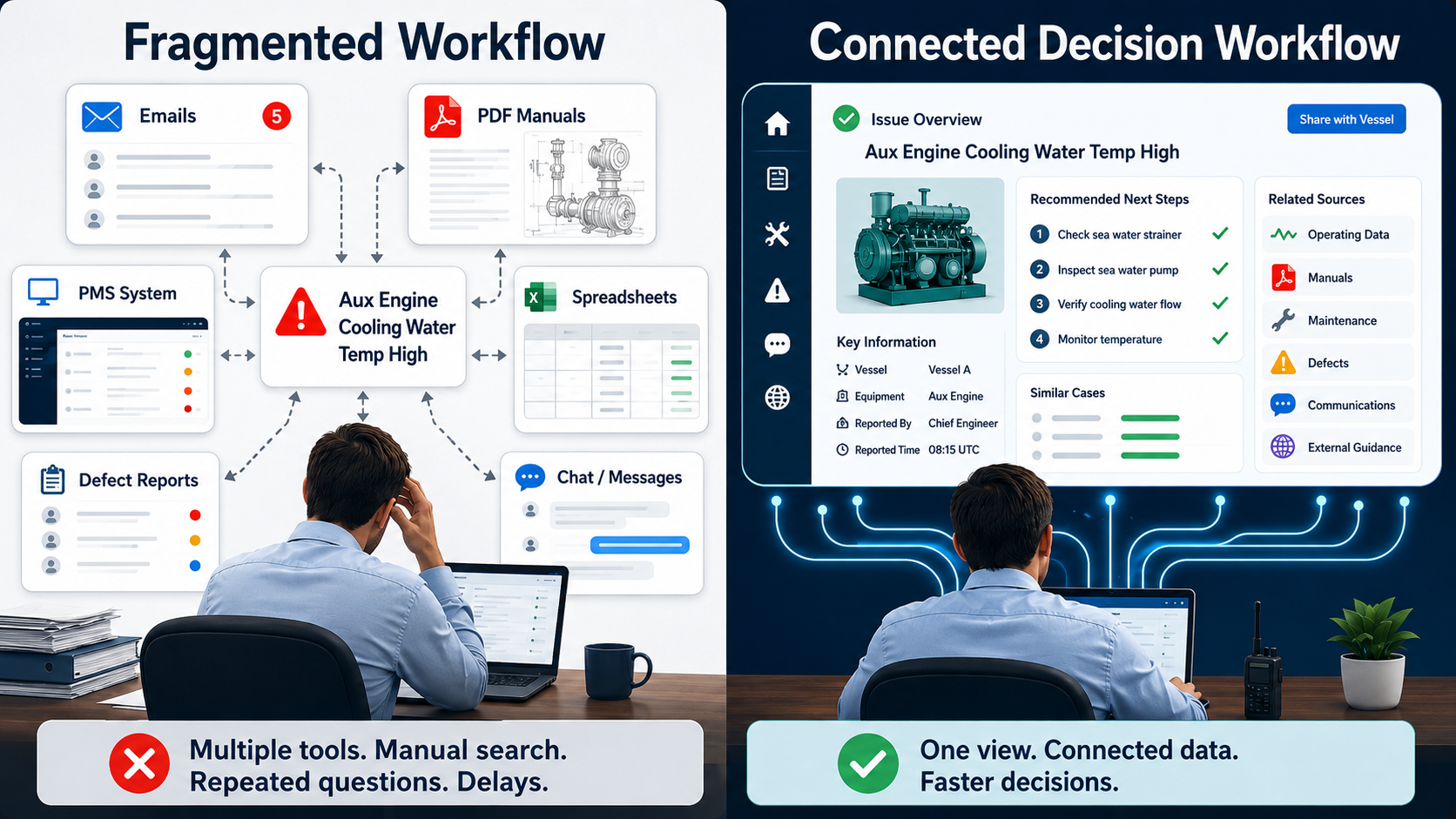
Fleet managers think in terms of one technical problem.
Software often separates the alarm, PMS record, defect report, manual, spare requisition and email correspondence. The fleet manager must connect them manually.
The same pump may be described as a jacket-water pump, HT pump, cooling pump or equipment tag P-204B.
Without consistent equipment mapping, systems may treat related records as separate assets.
Teams may remember that a similar failure occurred but cannot quickly locate the vessel, date or corrective action.
AI can search by meaning rather than relying only on exact keywords.
The crew sees the physical condition. Shore teams see selected readings, photographs and messages.
A shared technical timeline helps both sides review the same evidence, completed checks and next actions.
Experienced superintendents and chief engineers often recognize fault patterns quickly.
AI cannot replace that experience, but it can help capture and distribute approved technical knowledge across the fleet.
AI can search manuals, defect reports and technical communications using the language of the actual problem.
This reduces the time spent opening separate documents and systems.
AI can organize checks in sequence and record the result of each step.
Shore teams can then respond to the latest evidence instead of restarting the investigation.
AI can identify similar failures across vessels, equipment models and operating conditions.
This may reveal a weak component, unsuitable maintenance interval or recurring supplier issue.
A shared issue view can show:
This reduces repeated emails and clarification calls.
AI can help assess defects using equipment criticality, redundancy, recurrence, severity and operational impact.
The fleet must still define its own risk and approval rules.
This is where SmartSeas.AI becomes relevant.
SmartSeas.AI is an AI-powered maritime platform that helps vessel and shore teams connect technical information normally stored across separate systems and documents.
It can bring together:
For fleet managers, the objective is not another dashboard. It is faster access to the evidence required for a technical decision.
SmartSeas.AI supports AI-powered maritime troubleshooting by helping teams retrieve manual references, compare similar defects and create clearer ship-to-shore technical context.
The platform supports maritime professionals rather than replacing them. Chief engineers, superintendents and fleet managers remain responsible for assessing actual vessel conditions and approving action.
Fleet managers should begin with a defined operational problem rather than a broad technology project.
Start with a recurring challenge such as:
A troubleshooting workflow may require manuals, defect reports, maintenance history, alarms and technical correspondence.
Connecting every available system is not always necessary.
Prioritize:
Consistent equipment data makes it easier to connect related technical records.
Important AI output should link back to the manual, procedure, defect record or service letter used.
Users must be able to verify the information before acting.
AI may retrieve, summarize and compare information.
Authorized maritime personnel must still approve repairs, operational changes and safety-critical actions.
The final cause, repair and decision reasoning should return to the system so that future vessels can benefit.
AI for fleet managers must operate within clear controls.
Important limitations include:
AI should support engineering judgement, not bypass it.
Every resolved defect should create reusable technical knowledge.
A complete repair record should explain:
AI can connect this information into a simple learning cycle:
Report → Review → Decide → Repair → Record → Reuse
Over time, this improves troubleshooting consistency and reduces dependence on individual memory.
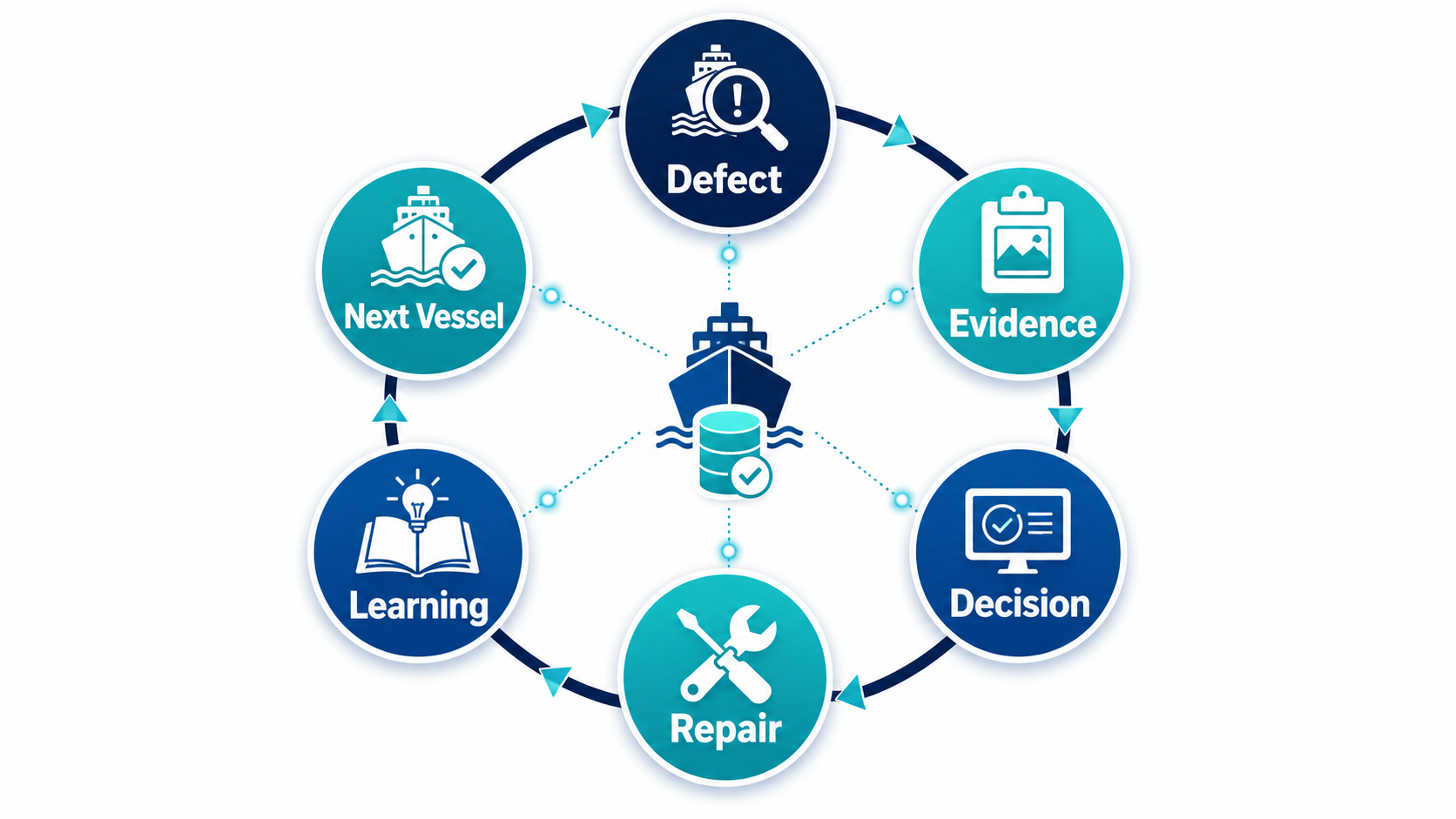
Fleet managers do not need more data—they need faster access to the right context.
AI for fleet managers connects vessel data, manuals, maintenance history, defect records and ship-to-shore communication to support quicker technical decisions. It helps teams find evidence faster, reduce repeated clarification and reuse previous fleet knowledge.
AI should support, not replace, maritime professionals. SmartSeas.AI helps fleets turn scattered technical information into clear, decision-ready intelligence.
It means using AI to connect vessel data, manuals, defect reports, maintenance history and technical communication to support faster decisions.
AI can support a decision, but authorized maritime professionals must assess the actual vessel condition and approve action.
Useful information includes machinery readings, alarms, manuals, maintenance records, previous defects, OEM guidance and technical correspondence.
It creates a shared issue record containing the defect, readings, completed checks, references and next actions.
Yes. AI can compare related equipment and defect histories across vessels when records are properly organized.
No. It complements planned maintenance software by connecting maintenance records with manuals, defects and wider fleet knowledge.
Start with one defined workflow, use a controlled vessel group, connect reliable data and measure operational results before expanding.

Get Started Today
Transform the way you troubleshoot and manage maritime operations. Join the next wave of Maritime Digital Transformation with SmartSeas AI.



.svg)