Manual troubleshooting has always been a core skill for marine engineers. When time, experience, and perfect documentation align, traditional troubleshooting works well. But today’s fleets operate under tight schedules, rotating crew with varying experience levels, complex machinery, and rapidly tightening compliance frameworks.
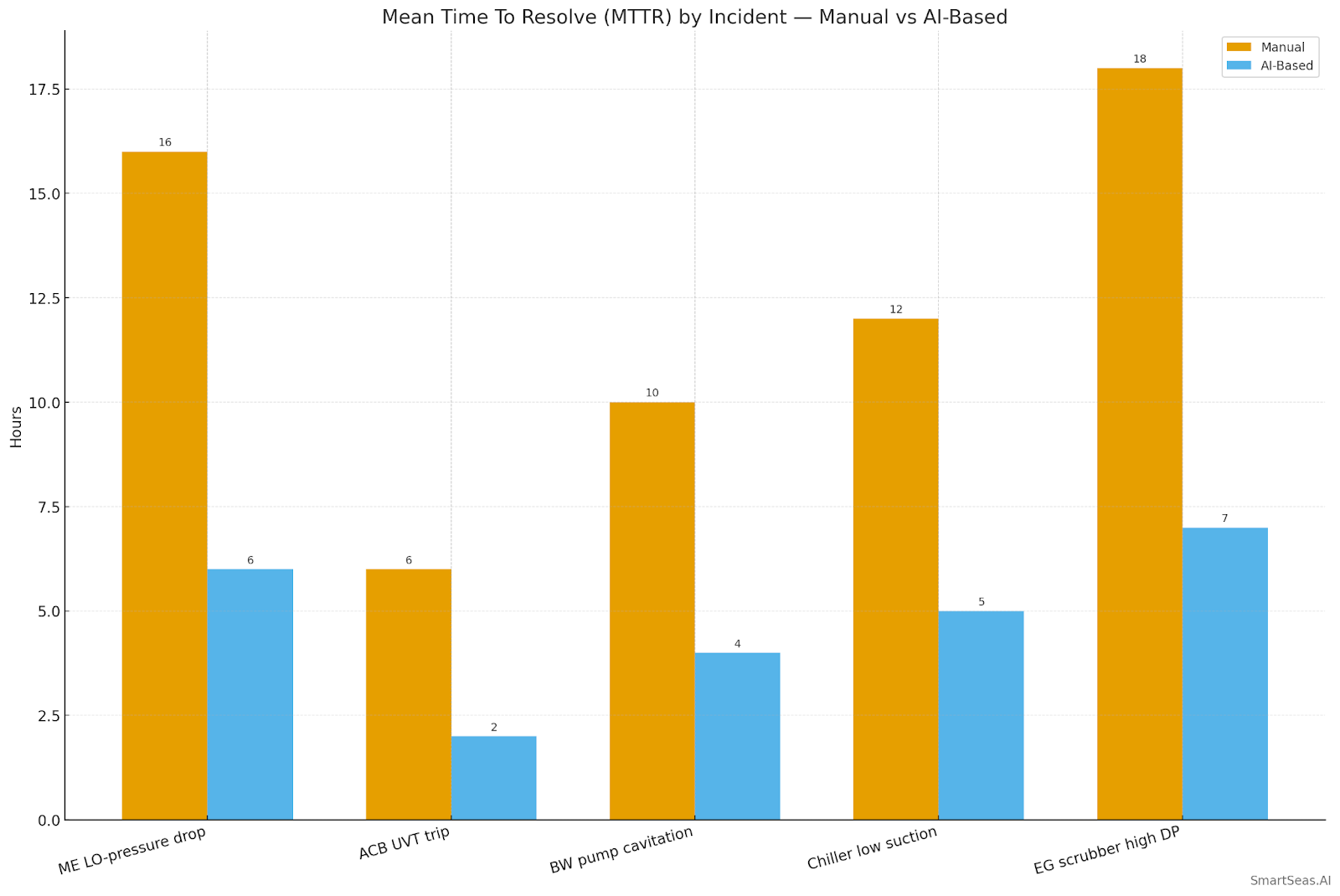
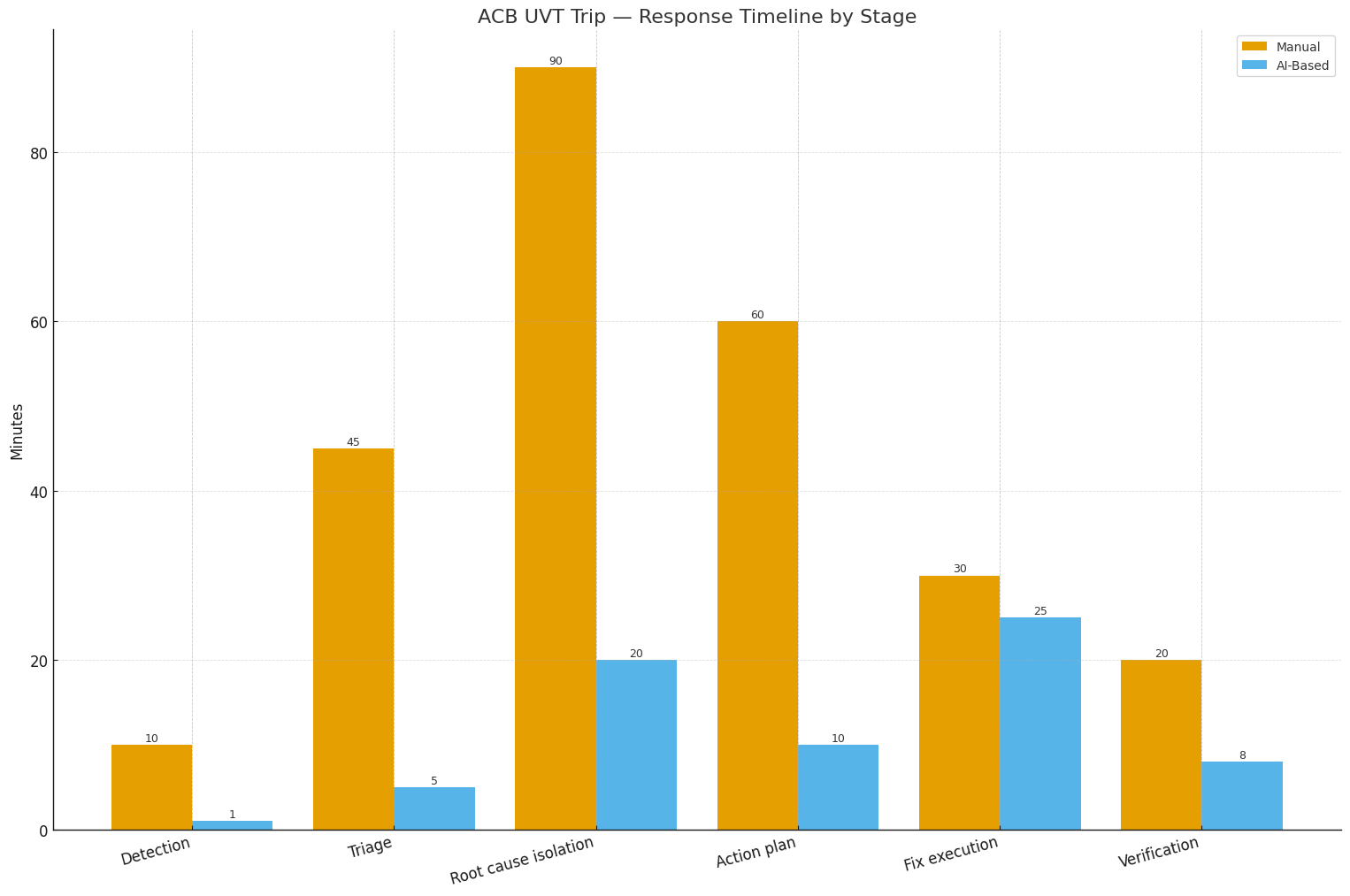
This is where AI-based ship diagnostics changes the game. It shifts troubleshooting from reactive and person-dependent to predictive, consistent, and explainable—cutting MTTR, reducing unplanned downtime, strengthening compliance readiness, and preserving fleet-wide knowledge.
Platforms like SmartSeas.ai combine real-time data interpretation, document-grounded reasoning, historic incident analysis, and guided corrective steps—helping fleets cut downtime and standardize responses across vessels.
AI vs Manual Troubleshooting: KPI Comparison
Below is the KPI comparison fleets typically observe:
AI vs Manual Troubleshooting – KPI Comparison
KPI
Manual (Typical)
AI-Based (Typical)
MTTR (hours, median)
12
5
First-time fix rate (%)
61%
89%
Unplanned downtime / 10k hrs
33
13
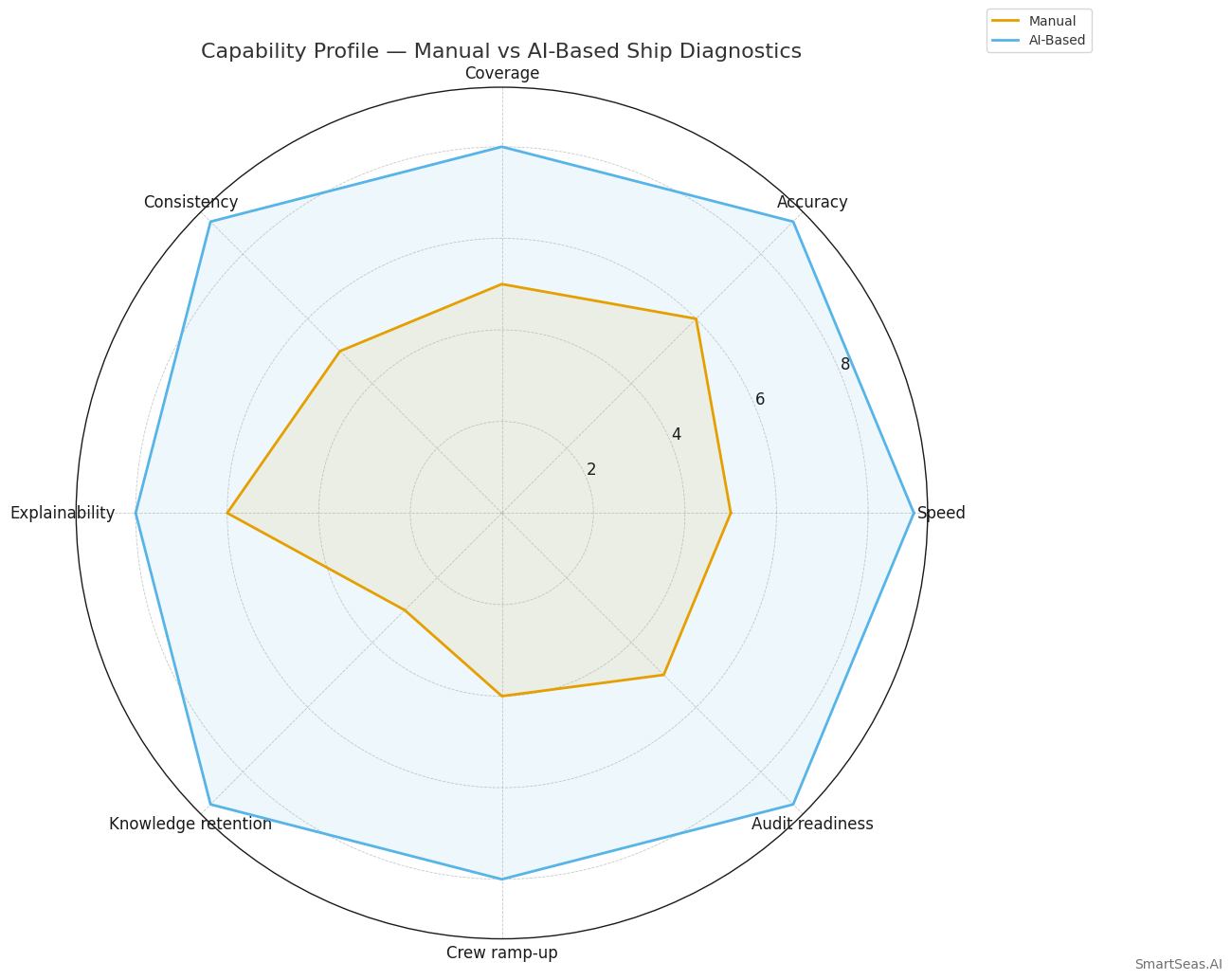
Diagnostic coverage (% of systems)
55%
85%
Documentation time per incident (mins)
45
12
Crew training ramp-up (weeks)
8
3
Knowledge retention (after 6 months)
Low (tribal)
High (centralized)
False-positive alerts (%)
12%
4%
Audit prep time (hrs/quarter)
30
8
What Are AI-Based Ship Diagnostics?
AI-Based Ship Diagnostics refers to intelligent systems that analyse equipment data, alarms, manuals, and incident history to provide real-time, context-aware troubleshooting guidance.
It transforms unstructured maritime data into a centralised diagnostics engine through:
a) Multimodal Data Intake
AI reads:
Alarms
Engine and machinery sensor time series
PLC/ACB event logs
Crew notes (text & voice)
Photographs of panels/equipment
b) Document-Grounded Reasoning
The system retrieves answers directly from:
Manuals
OEM service letters
SOPs
Historic defect logs
Every suggestion is traceable to your documents, not the open internet.
c) Real-Time Triage
AI quickly narrows root causes using:
Incident patterns
Fault tree logic
Context (load, port, ambient conditions)
d) Explainable, Step-by-Step Suggestions
Includes:
Precise checks
Expected readings
Safety prompts
Why each step matters
e) Closed-Loop Learning
Every incident feeds back into the system, standardising knowledge across the fleet.
Think of it as a digital senior engineer that never sleeps, never forgets, and gets smarter with every vessel movement.
Manual Troubleshooting : Where It Helps and Where It Fails
Manual troubleshooting has its strengths:
Strengths of Manual Methods
Deep intuition from seasoned engineers
Ability to improvise in edge cases
Situational awareness of machinery and safety
Strong contextual understanding of vessel behaviour
AI-Based Ship Diagnostics deliver value through five main levers:
Fewer incidents
Shorter incident duration (lower MTTR)
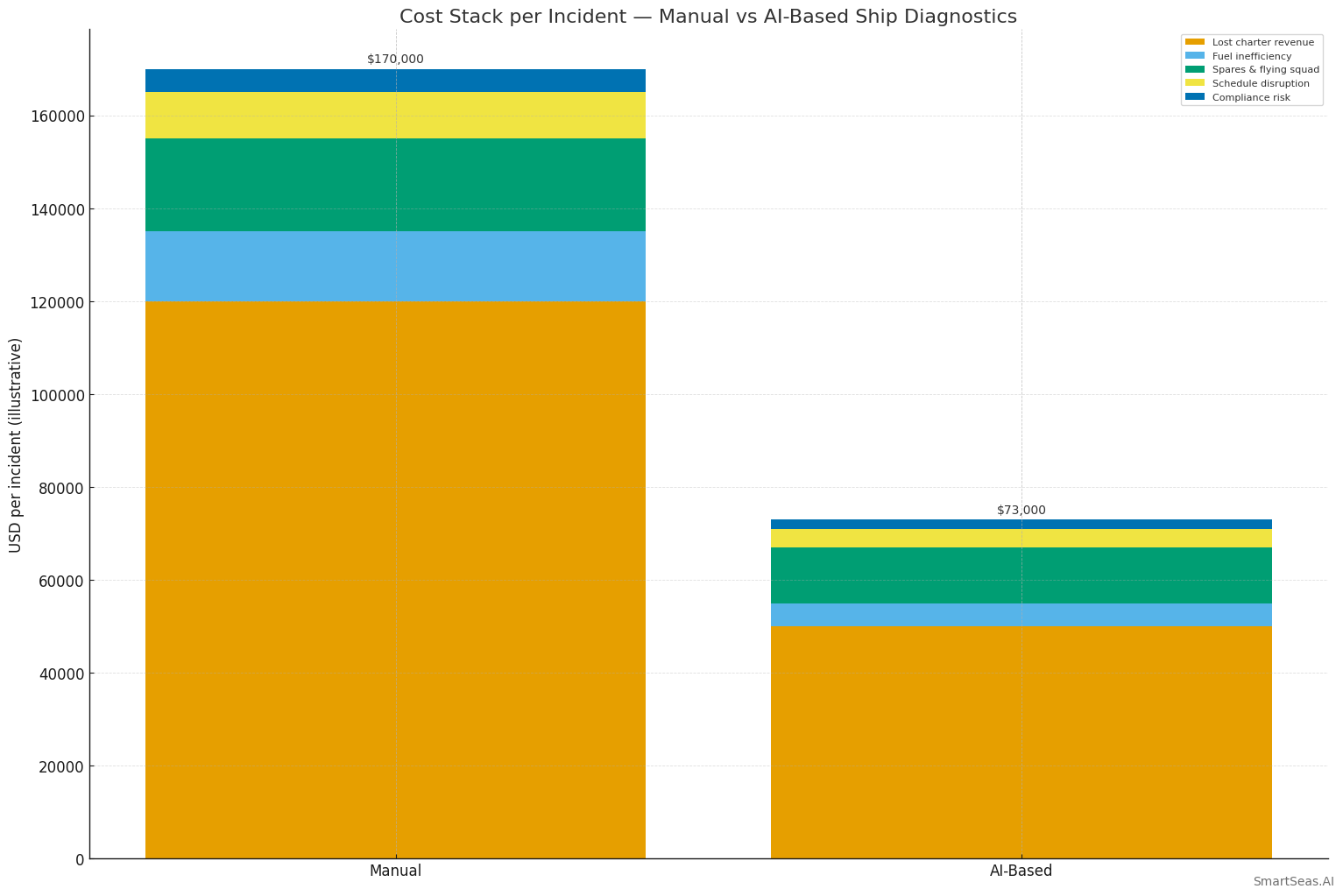
Lower repair cost
Better documentation & audit readiness
Reduced crew training time
Typical fleet-level ROI emerges within 6–12 months.
Safety, Compliance & Audit Readiness
AI strengthens safety and compliance through:
Safety-First Prompts
Automated reminders:
LOTO
Enclosed space entry
HV precautions
Hot work protocols
Explainability
Every recommendation cites:
SOP clause
Manual figure
OEM bulletin
Audit Trails
Perfect for:
SIRE 2.0
PSC inspections
Vetting
Change Control
Always uses the latest approved procedure.
Private Data Retrieval
Works on a sandboxed knowledge base—your data stays isolated.
Implementation Blueprint: 90-Day Rollout
Phase 1 (Week 1–3) — Foundation
Identify top 10 incident types
Upload manuals, bulletins, logs, SOPs
Normalise equipment taxonomy
Select 2–3 pilot vessels
Phase 2 (Week 4–7) — Assistant Go-Live
Configure AI retrieval for your documents
Enable voice + chat modes
Setup safety & escalation rules
Crew drills with simulated incidents
Phase 3 (Week 8–12) — Iterate & Scale
Compare baselines vs AI-enabled metrics
Tune reasoning patterns
Auto-summarise incidents into HSSEQ workflows
Expand to boilers, IG systems, purifiers
Buyer’s Checklist (Fleet Manager Ready)
Ask vendors:
Do we retain data sovereignty?
Are all answers sourced from our manuals?
Is every step explainable with citations?
Does it support offline operation?
Can it ingest our CMMS, PMS, and incident logs?
Do we get SIRE-ready structured logs?
Are LOTO/HV/hot-work prompts built-in?
Can it adapt to our system → equipment → component taxonomy?
Buyer’s Checklist for Fleet Managers
Checklist Item
Description
Data sovereignty
Vendor should allow you to keep all fleet data private and choose storage location.
RAG quality
AI must cite only your manuals, SOPs, and OEM documents.
Explainability
Steps should always include source references and diagrams.
Safety prompts
LOTO, HV checks, hot-work reminders must be embedded by context.
Voice & offline modes
Should work hands-free in ECR/ER and continue offline with onboard caching.
Taxonomy fit
Supports system → equipment → component → failure mode structure.
Audit trail
Exports structured logs for SIRE 2.0, PSC, vetting.
KPI tracking
Allows dashboards for MTTR, downtime, rework, first-time fix.
Integration
Should ingest CMMS, PMS, manuals, incident logs seamlessly.
Change control
Supports versioning and expiry of old procedures.
SmartSeas.ai make this transition practical, compliant, and fleet-ready by combining document-grounded reasoning, real-time insights, and structured fleet intelligence into a single decision-support layer.
Final Thoughts
Manual troubleshooting will always need expert marine engineers but AI-Based Ship Diagnostics elevates every engineer to operate with greater speed, consistency, and confidence. It shortens time from alarm to fix, reduces incident recurrence, strengthens compliance, and ensures knowledge stays with the organization rather than rotating crew.
For fleets seeking predictable operations, reduced downtime, and stronger technical performance, AI is no longer optional—it's a competitive necessity.
No. It augments engineers—speeding triage and standardizing best practices. Engineers remain the authority for safety and execution.
2) What if the AI suggests a wrong step?
Use vendors that enforce source-grounding and explainability. Your procedures remain the source of truth; humans must approve and verify.
3) Can it work offline?
Yes—deploy onboard caches for playbooks and recent incident packages. Sync deltas during connectivity windows.
4) How fast is the guidance?
Typically real-time for retrieval and reasoning. The big save is on triage and isolation; guidance appears within seconds, compressing hours of search.
5) What data do we need to start?
Manuals, OEM bulletins, incident logs, SOPs. Begin with the top 10 incidents; expand over time.
6) How does it handle different equipment makes?
Through taxonomy and alias mapping plus model-specific procedures. Retrieval is filtered by make/model where available.
7) Is voice actually practical in the engine room?
Yes with noise filters and push-to-talk. Many teams prefer hands-free prompts for checks and readings.
8) How are audits improved?
Every interaction is structured and timestamped; you can export incident narratives with evidence, trimming audit prep from hours to minutes.
9) What about cybersecurity and privacy?
Keep the data in your tenant. Enforce role-based access, encryption at rest and in transit. Disallow publicly trained models on private logs.
10) How do we measure success?
Track MTTR, first-time fix, downtime hours, rework rate, audit prep time. Compare pilot vessels to historic baselines.
.jpg)





.svg)

.png)