Modern fleet management is no longer just about “keeping ships running.” It’s about running safer operations, reducing delays, controlling costs, meeting rising reporting requirements, and making decisions faster, across dozens (sometimes hundreds) of vessels, multiple time zones, and mixed connectivity.
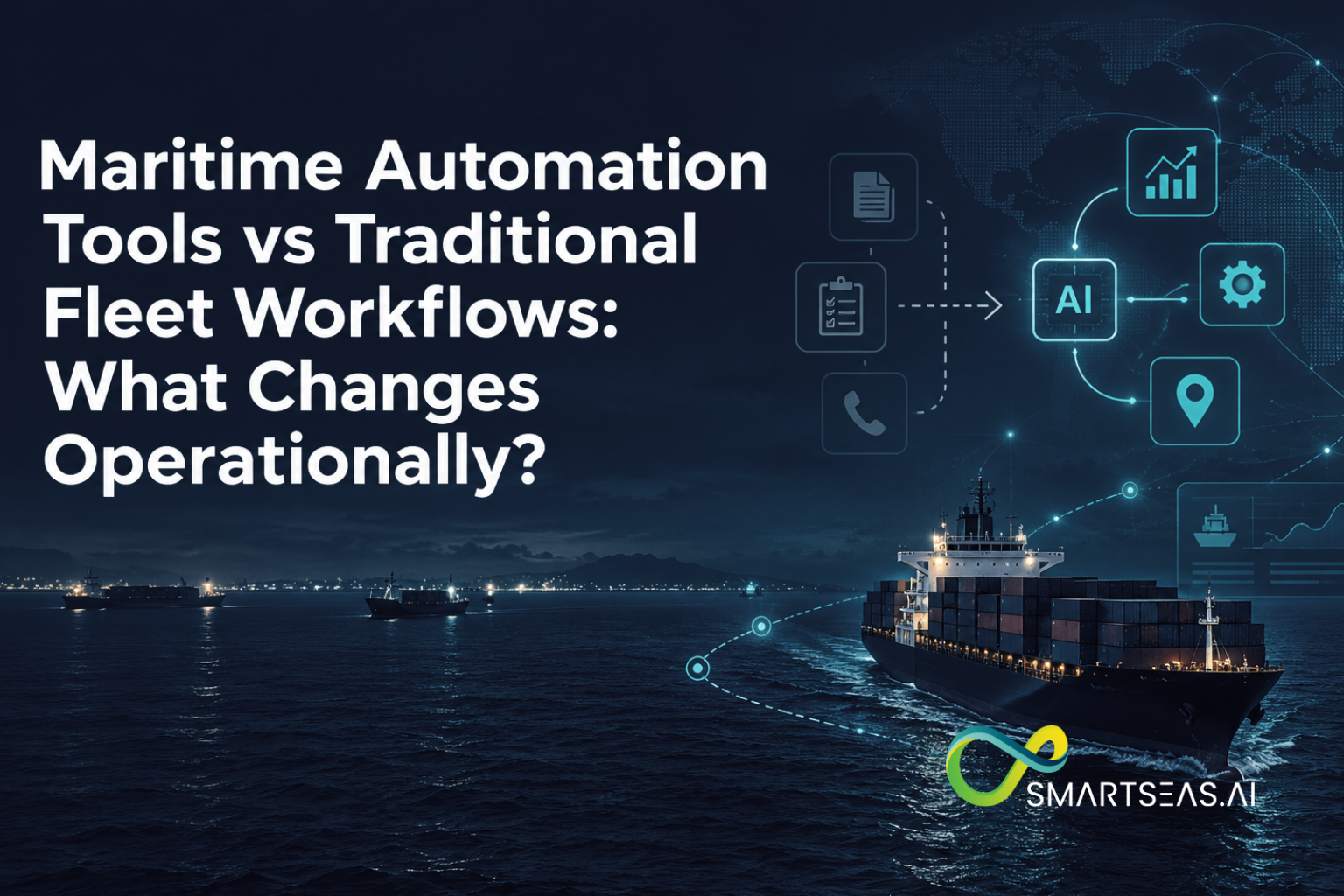
In the past, many fleets managed this with a patchwork of emails, Excel trackers, paper checklists, and different tools on different vessels. That approach breaks down quickly when:
a vessel is trading faster and schedules are tight
spare parts have longer lead times
energy and emissions performance affects chartering and commercial outcomes
cyber risks must be handled as part of ship operations
shore teams need visibility in real time, not “after the fact”
This is where maritime software becomes the backbone of modern fleet management. Not “software for software’s sake,” but systems that turn daily operations into repeatable workflows with trusted data, so ship and shore teams can act faster and learn from every incident.
What “maritime software” really means (and why it’s different from normal business software)
Maritime software is built for the realities of shipping:
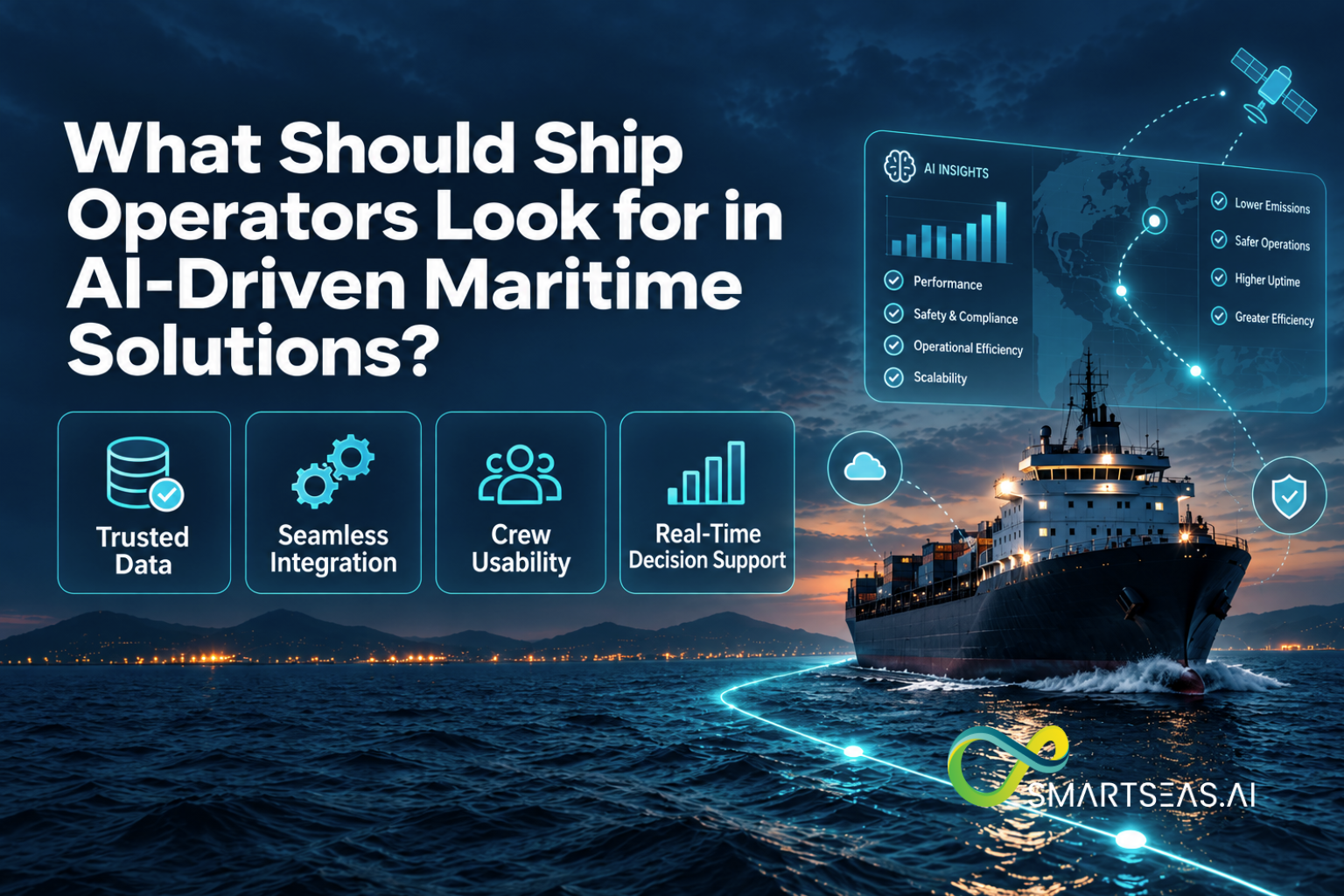
Intermittent internet / low bandwidth: vessels can’t rely on always-on connectivity.
Safety-first workflows: permits, checklists, logs, and approvals must be consistent.
Audit trails and records: maintenance, incidents, and reporting need traceability.
Mixed stakeholders: crew, superintendents, owners, managers, charterers, class, flag, port state, and vendors.
High-cost downtime: delays can cascade into off-hire, missed schedules, and penalties.
That’s why successful fleets use purpose-built systems for maintenance, spares, safety, performance, crewing, and reporting, integrated into one operating model.
The “why now”: three big shifts forcing fleets to modernize
1) Reporting and emissions performance are now part of daily operations
Fleets are facing multiple layers of environmental rules and performance frameworks. For example:
IMO DCS fuel data collection began on 1 January 2019.
EEXI and CII requirements took effect on 1 January 2023, with the first annual reporting in 2023 and initial ratings issued in 2024.
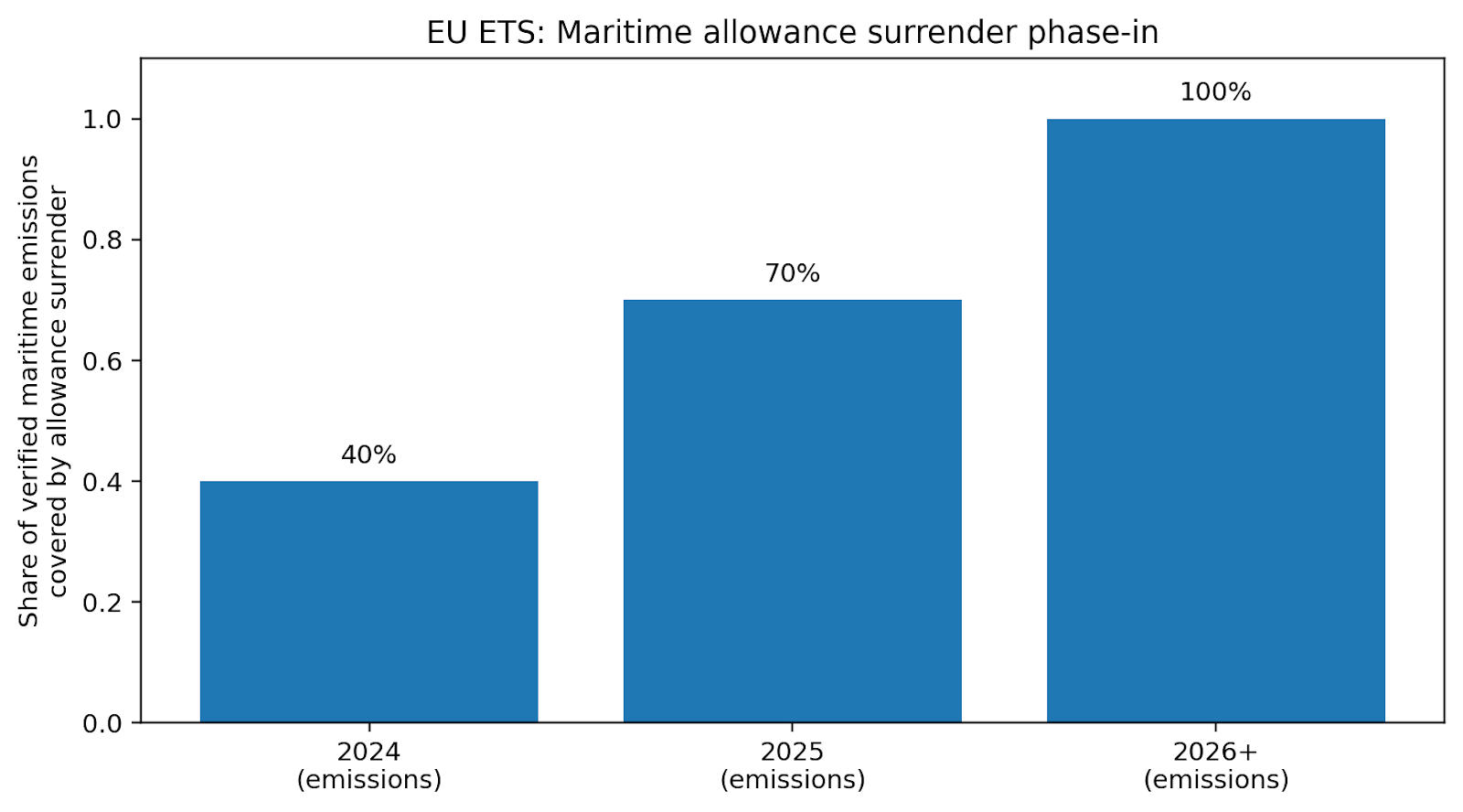
The EU ETS was extended to maritime transport from 1 January 2024, with a phase-in (40% → 70% → 100%).
When these requirements hit, fleets typically discover a painful truth: data exists, but it’s scattered across noon reports, emails, Excel, bunker delivery notes, and different vendor portals. Maritime software helps bring that into one controlled workflow.
2) Maintenance and reliability expectations are rising
The ISM Code requires companies to ensure ships are maintained in conformity with relevant rules and regulations, and to establish maintenance procedures. In practice, many fleets implement this with a Planned Maintenance System (PMS) and some solutions explicitly state PMS is mandatory under the ISM framework.
3) Cyber risk is now treated as an operational ship-management issue
IMO adopted MSC.428(98), encouraging cyber risk to be addressed in Safety Management Systems no later than the first annual verification of the Document of Compliance after 1 January 2021. That means fleet software isn’t only about “features”, it must support access control, logging, backups, and secure integrations.
The core modules that matter in modern fleet management
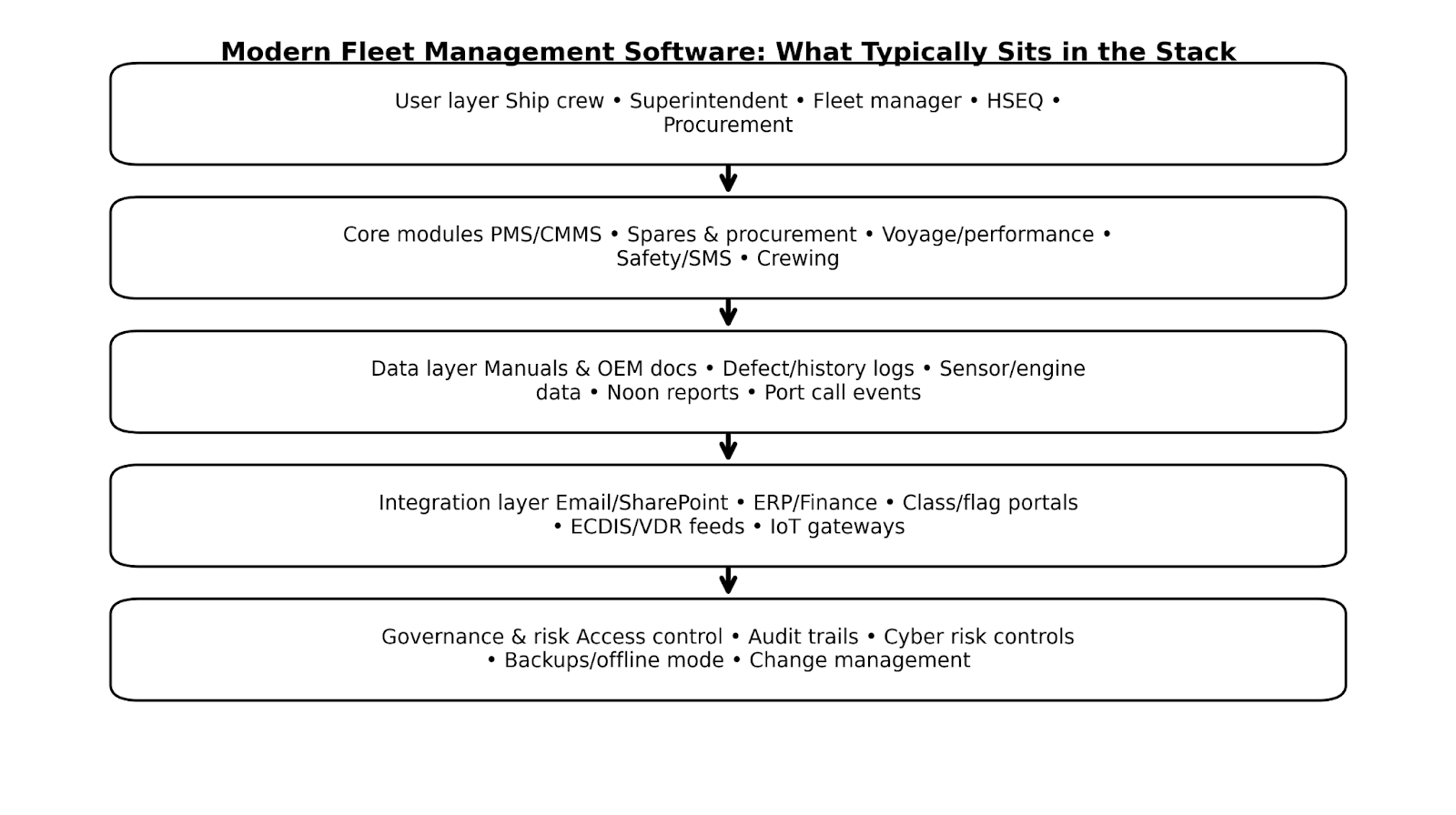
Think of maritime software as a set of connected layers rather than isolated tools.
Here are the modules that typically create the biggest operational impact:
1) Planned Maintenance + Work Order Management (PMS/CMMS)
What it solves:
Prevents “missed maintenance” and last-minute scrambling
Creates a consistent method for planned and unplanned jobs
Gives shore teams visibility into workload, overdue items, and recurring failures
Example capability (typical in major systems):
Define calendar/counter-based tasks, document planned/unplanned work, and support fleet-wide reporting.
Why it matters:
Maintenance is not just about doing tasks; it’s about proving tasks were done correctly and learning from failures.
2) Spares, Procurement, and Inventory
What it solves:
Reduces urgent, expensive purchasing
Improves “right part at right time” outcomes
Links spare usage to maintenance jobs and recurring faults
This becomes critical when supply chains are tight and delays are expensive.
3) Voyage, Performance, and Energy Efficiency Tools
What it solves:
Helps reduce fuel consumption through better routing, speed decisions, and operational guidance
Supports consistent reporting for emissions performance
Evidence that software-enabled operational levers can deliver real fuel reductions:
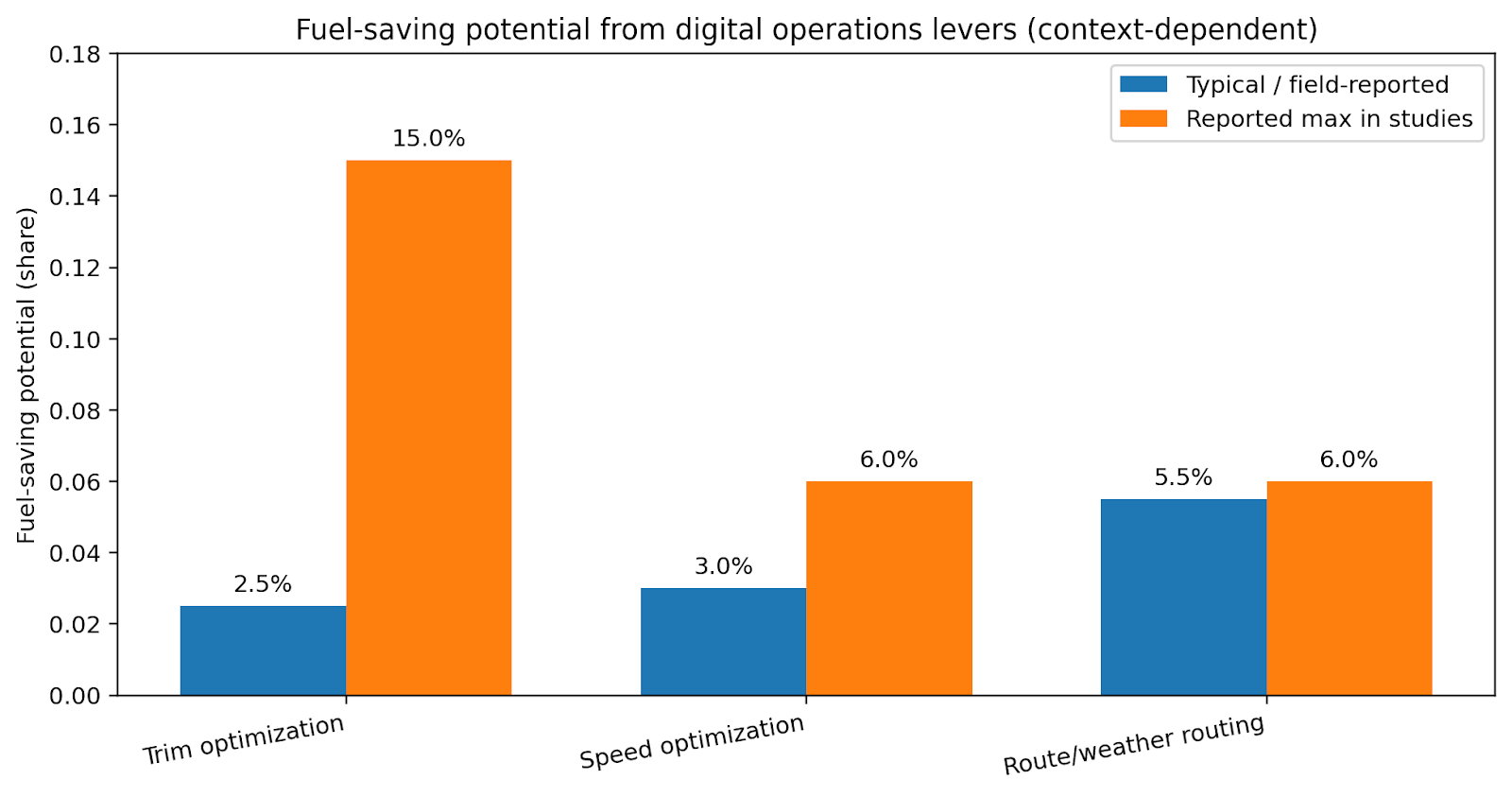
Speed optimization studies report up to ~6% fuel savings in certain scenarios.
Trim optimization literature reports typical savings in the 2–3% range in fleet operations, with higher savings possible in specific conditions.
Reuters reported a real-world example where Sofar Ocean claimed an average fuel use reduction of 5.5% in 2024, saving $17,700 per voyage (company statement).
4) Safety Management System (SMS), permits, checklists, incidents, audits
What it solves:
Standardizes safety workflows ship-to-ship
Creates a clear audit trail
Helps shore teams spot repeating risk patterns
5) Crewing and training (certificates, rest hours, competence)
What it solves:
Reduces compliance risk and last-minute crewing issues
Ensures the right skills are onboard for the trading pattern
6) Reporting workflows (DCS, CII/SEEMP III support, EU ETS, EU MRV, etc.)
What it solves:
Reduces manual effort and rework
Improves accuracy and traceability
Helps fleets respond quickly if auditors/authorities request evidence
For example, IMO guidance highlights fuel oil consumption data reporting and related outputs, and CII ratings are tied to operational data reporting. EU ETS maritime inclusion and surrender schedules make “good emissions data” financially important.
The most practical way to understand value: 6 “live” use cases
Below are real-world operational scenarios where maritime software changes outcomes, not just dashboards.
Use case 1: Planned maintenance prevents repeat breakdowns
Situation: A vessel experiences recurring lube oil purifier alarms. The crew fixes the symptom, but the issue returns every few weeks. Shore teams see it late, because updates arrive via email, and the “learning” never becomes standard practice.
With maritime software:
The defect is logged in a structured way
The work order links to parts replaced, maker guidance, and test results
The system flags recurrence (same equipment + same symptom pattern)
A preventive job plan is updated across sister vessels
Why it works: maintenance becomes a closed loop: symptom → fix → verify → learn → prevent. PMS systems are built to document planned/unplanned tasks and enable fleet-wide reporting.
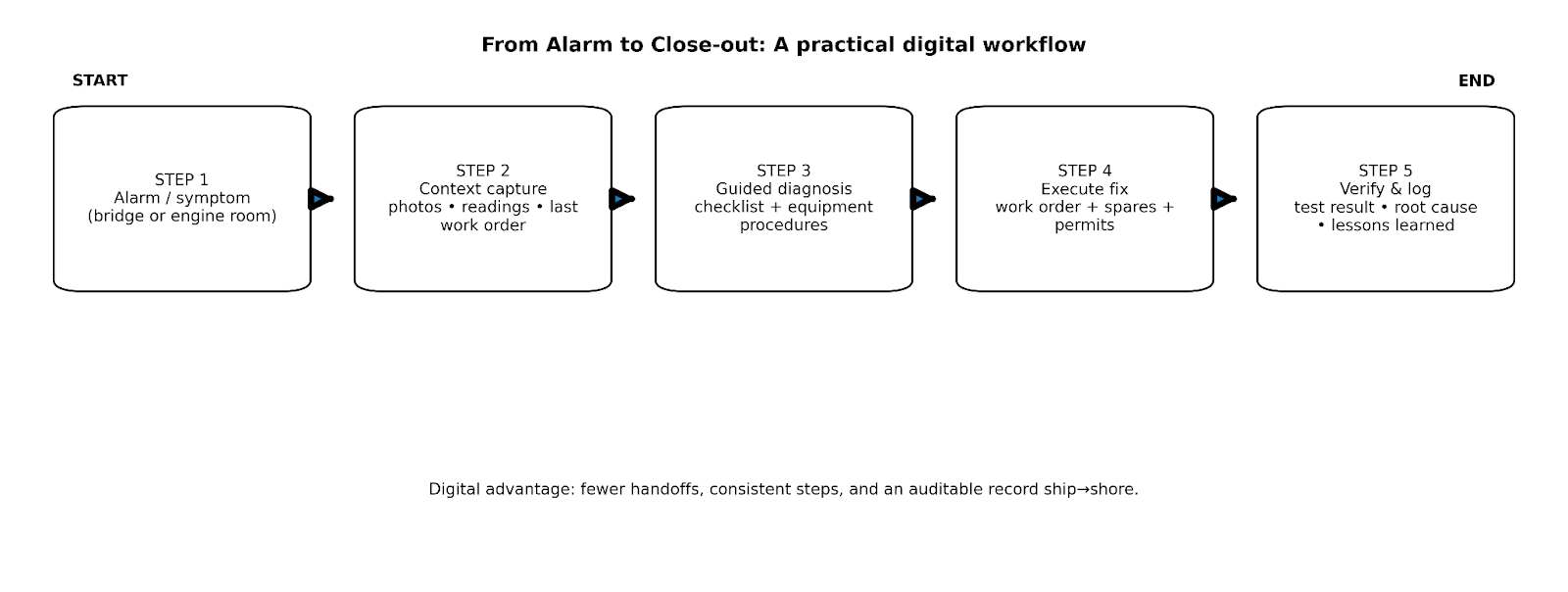
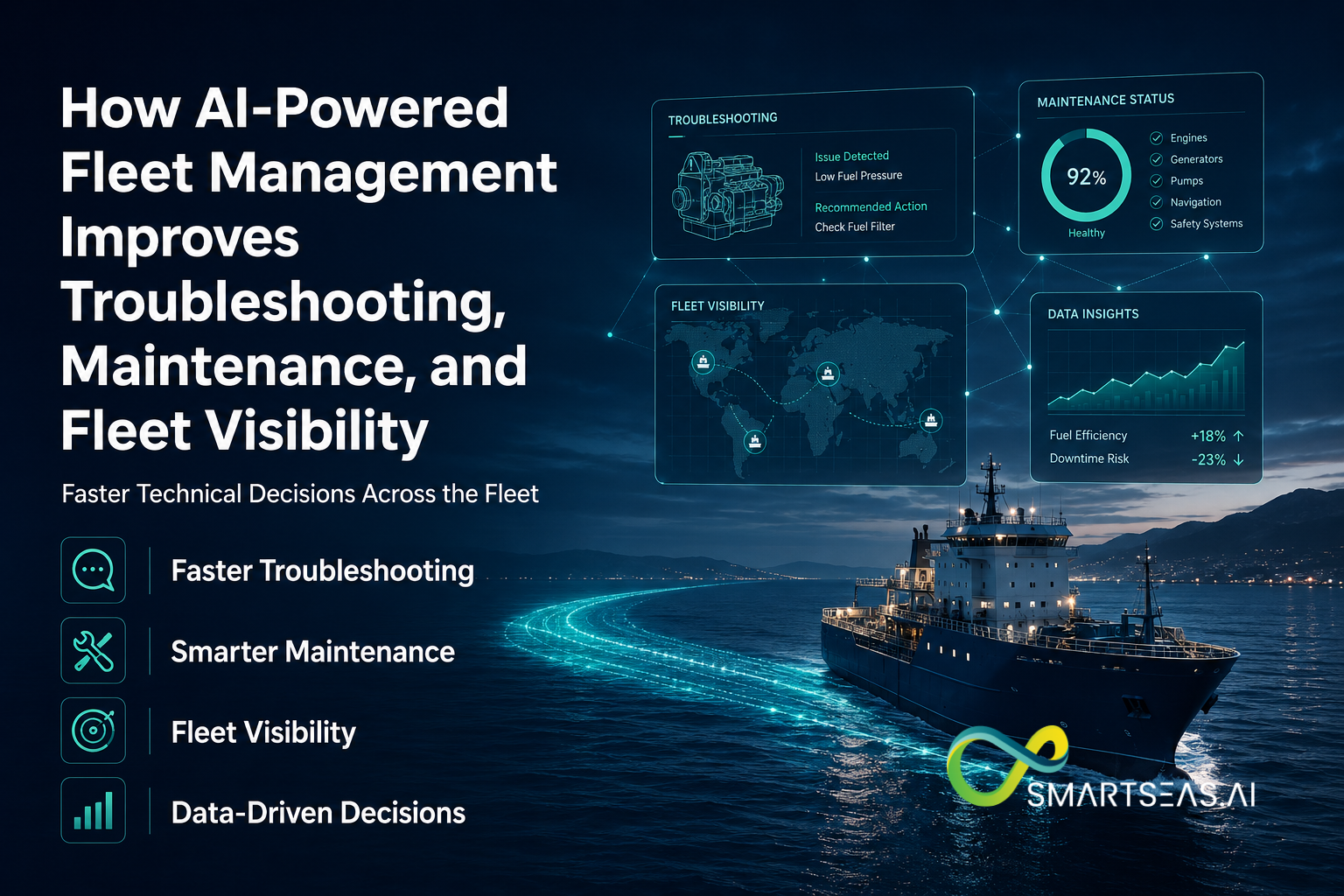
Use case 2: Alarm-to-closeout gets faster and more consistent
When a critical alarm happens, the actual delay is often not the physical repair, it’s the time lost in:
identifying the right procedure
confirming the correct equipment configuration
checking last similar incidents
aligning ship and shore on what to do next
What software changes:
Crew captures context (readings, photos, status)
Guided steps reduce “trial and error”
Work orders + spares + permits are aligned
Verification and lessons learned are logged immediately
Result: fewer handoffs, fewer repeat mistakes, and better consistency across the fleet.
Use case 3: Voyage routing and operational guidance reduces fuel cost
Fuel is usually the largest operating cost line item. Even small percentage improvements matter.
What modern software can do:
evaluate alternative routes/speeds
integrate better weather and sea-state forecasting
recommend operational adjustments that reduce resistance or unnecessary speed changes
Examples from public sources:
Research studies show speed optimization can deliver measurable fuel savings (reported up to ~6% in certain studies).
Reuters reported an example where a routing software provider claimed an average fuel reduction of 5.5% in 2024 and quantified savings per voyage (company claim).
Important note: Routing tools don’t replace seamanship. They give better information, captains still make the final call.
Use case 4: Digital reporting prevents “month-end chaos” (DCS/CII/EU ETS)
Situation: Shore teams spend days collecting data from different sources to finalize reports. Errors lead to corrections, rework, and stress before deadlines.
Ignoring cybersecurity until the audit Fix: build cyber controls into the rollout plan (users, roles, logging).
Where the industry is going next
Over the next few years, expect maritime software to become more:
predictive: more early-warning and trend-based maintenance (not just schedules)
connected: more integrations with class/flag portals and vendor ecosystems
decision-focused: less “reporting dashboards,” more “what should we do next?”
crew-friendly: faster, simpler interfaces built for onboard realities
audit-ready by design: evidence capture becomes automatic, not manual
And as emissions rules tighten globally, software that makes operational and reporting work easier will become a competitive advantage, not just an IT upgrade.
Conclusion
Maritime software is important in modern fleet management because it turns shipping from a “reactive, document-heavy operation” into a repeatable, data-driven operating system, one that supports safer voyages, fewer breakdowns, better fuel performance, faster reporting, and stronger coordination between ship and shore.
The winning fleets won’t necessarily be the ones with the most tools. They’ll be the fleets that standardize workflows, capture clean data, and use software to make daily decisions faster and more consistent.
If you want a simple next step: pick one operational pain (maintenance delays, fuel drift, reporting rework, recurring alarms) and implement software to fix that first, then scale.
FAQs
1) What is maritime software in fleet management?
It’s specialized software used to manage ship operations—maintenance, spares, safety workflows, performance, crewing, and reporting—across a fleet, connecting ship and shore.
2) Is a Planned Maintenance System (PMS) mandatory?
Many fleets treat PMS as essential under ISM maintenance requirements; some major solutions explicitly state that PMS on ships is mandatory according to the ISM framework.
3) Which module should a fleet implement first?
Most fleets start with PMS/work orders and spares because they reduce repeat failures and urgent costs quickly.
4) How does maritime software reduce downtime?
By standardizing troubleshooting steps, improving maintenance planning, ensuring spare availability, and capturing lessons learned so repeat issues reduce over time.
5) Can maritime software reduce fuel consumption?
Yes, through better routing, speed decisions, trim guidance, and performance tracking. Studies and public reporting show measurable savings potential in certain conditions.
6) What’s the role of software in DCS/CII and emissions reporting?
It automates data capture, validates inputs, and keeps a traceable record. IMO DCS began in 2019 and CII reporting/rating is tied to operational data.
7) How does EU ETS affect fleet operations?
The EU ETS includes maritime emissions from 1 January 2024 and introduces a phased-in surrender obligation (40% → 70% → 100%), making accurate emissions data financially important.
8) What should I look for when choosing maritime software?
Offline capability, clear workflows, integrations (ERP/email/docs), strong access controls, audit trails, and a user interface crew will actually use.
9) How long does it take to roll out across a fleet?
A focused rollout for one module can start showing results in 60–90 days. Full fleet transformation is usually phased over several months.
10) Why is cybersecurity now part of fleet software discussions?
Because IMO MSC.428(98) links cyber risk management to Safety Management Systems by the first annual verification after 1 January 2021. Fleet systems need secure roles, logs, and recovery planning.
.jpg)

%20(1).png)




.svg)


.png)