.jpg)


Digital transformation in the shipping industry is no longer a future topic. It is becoming part of how shipping companies improve efficiency, compliance, resilience, and day-to-day decision-making. Maritime transport still carries around 80% of global trade by volume, so even small operational improvements can have meaningful impact across fleets, ports, and supply chains.
This shift is not just about replacing paper with screens. It is about making port calls smoother, documents easier to manage, ship-to-shore coordination clearer, and operational decisions faster. In shipping, digital transformation matters when it reduces friction in real work.
That matters even more now because regulation and market pressure are moving in the same direction. IMO’s Maritime Single Window is already mandatory, fuel and emissions data requirements are now part of normal operations, and maritime cyber guidance has been updated to reflect growing dependence on connected systems.
Shipping companies are operating in a more data-dependent environment than before. IMO’s Data Collection System applies to ships of 5,000 GT and above, which account for about 85% of CO2 emissions from international shipping, and since 2023 that data has also been used to calculate operational carbon intensity. That means digital capability is no longer just about convenience. It is part of compliance and performance management.
At the same time, digitalization is being pushed by practical business needs. DNV says digitalization and automation are speeding up in maritime because they help increase competitiveness, improve operational efficiency, and support decarbonization.
UNCTAD’s latest shipping work shows the same pattern. It reports that seaborne trade grew 2.2% in 2024, while 2025 conditions became more fragile, which raises the value of better coordination, visibility, and efficiency across maritime operations.
For years, many shipping companies digitized only parts of the workflow. They added reporting tools, monitoring systems, or document platforms, but core information often stayed fragmented across PDFs, email threads, spreadsheets, and separate software systems.
That is now changing. The industry is moving from isolated tools toward connected workflows. The focus is shifting to data flow between ports, ships, shore offices, cargo stakeholders, and class. That is what makes the current phase of maritime digital transformation more useful than earlier software-led efforts.
Before looking at each trend in more detail, this summary table shows what is changing and why it matters.
Port-call reporting is moving to centralized digital platforms. IMO made Maritime Single Window mandatory from 1 January 2024 so ports can exchange arrival, stay, and departure information electronically through a single system.
The advantage is straightforward: less repeated reporting, better coordination, and faster clearance. UNCTAD also points to Port Community Systems and similar digital infrastructure as tools that improve trade facilitation and logistics performance.
A good example is India, where average turnaround time at major ports fell from about 94 hours in 2013–14 to 48.06 hours in 2023–24. Djibouti’s port community system also cut terminal operator turnaround time from 24 hours to 1 hour.
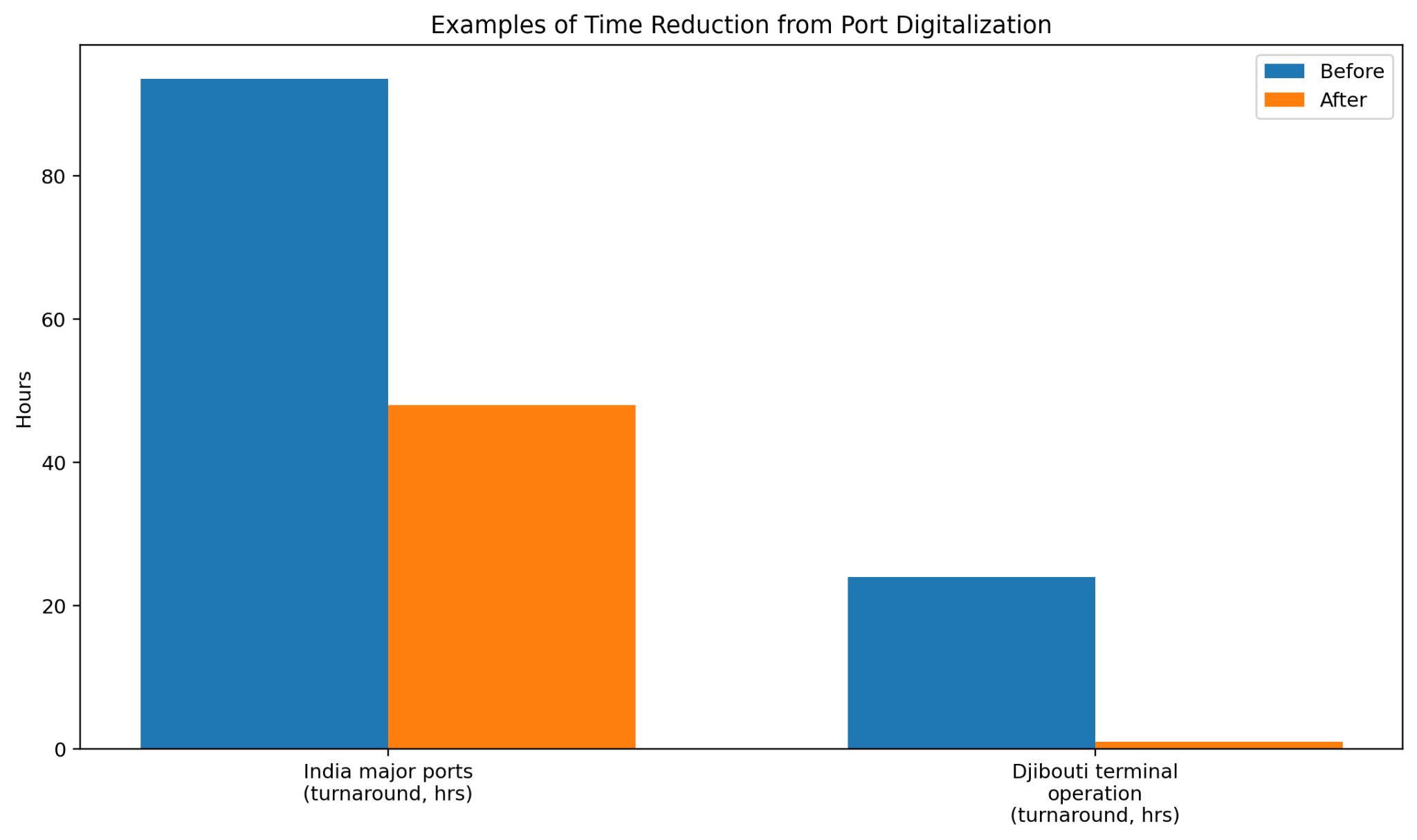
Source: UNCTAD, Review of Maritime Transport 2025, Chapter IV: Port performance and maritime trade facilitation. Reported examples include India’s PCS reducing ship turnaround time at major ports from 94 hours in FY2013–2014 to 48.06 hours in FY2023–2024, and Djibouti’s PCS reducing terminal operator turnaround time from 24 hours to 1 hour.
Shipping documents, especially bills of lading, are steadily moving from paper to digital workflows. DCSA member carriers committed in 2023 to convert 50% of original bills of lading to digital within five years and 100% by 2030.
The benefit is not only less paperwork. Digital documents can reduce handling delays, improve traceability, and support smoother handoffs between carriers, shippers, banks, and customs stakeholders.
In simple terms, this trend helps move shipping documentation from a delay point to a flow enabler.
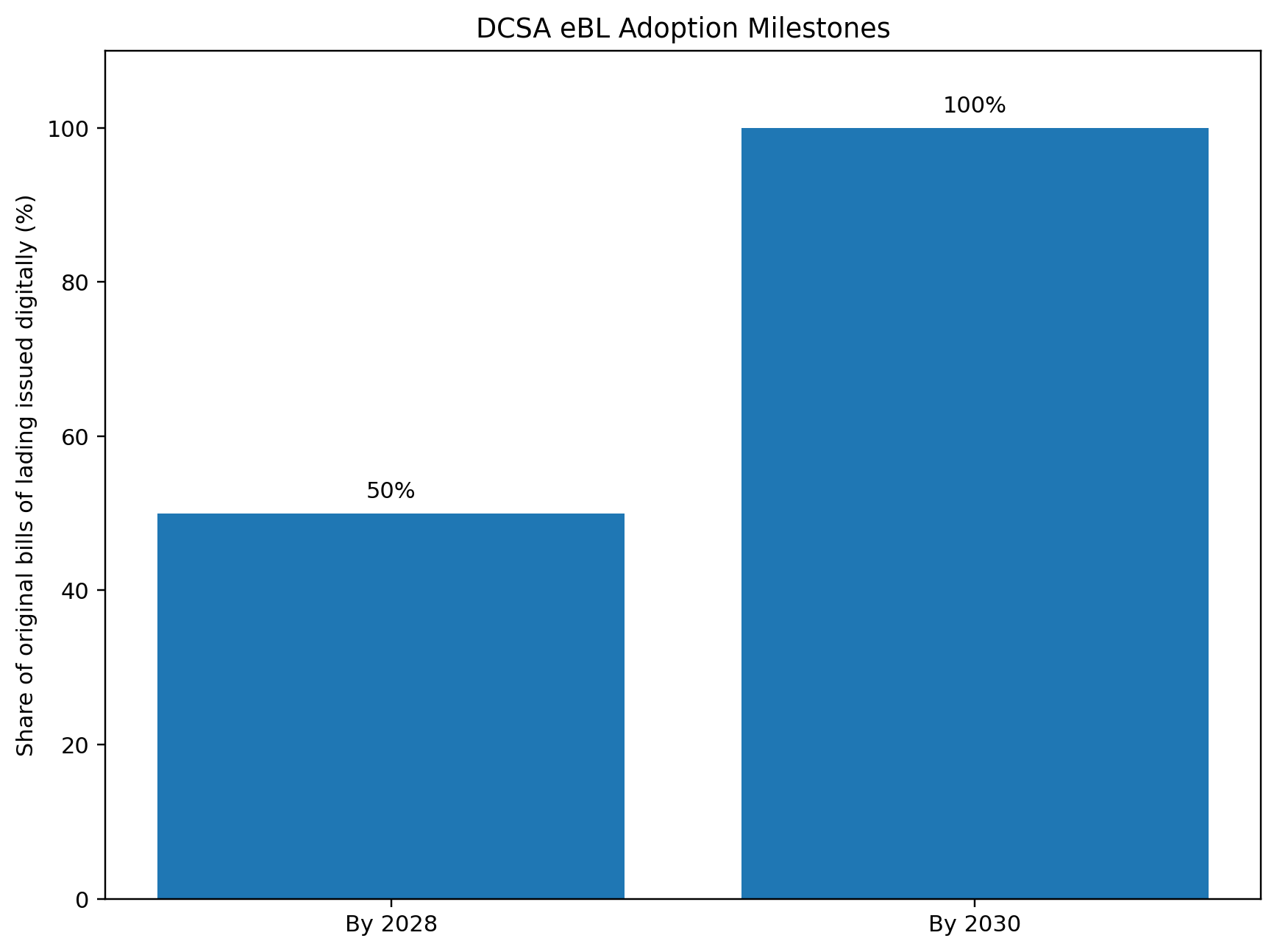
Source: DCSA, 100% eBL by 2030. DCSA member carriers committed to issue 50% of bills of lading digitally within 5 years and 100% by 2030.
Shipping companies are trying to connect vessel and shore information more effectively. DNV highlights system integration, connectivity, automation, data management, cyber security, and data sharing as core parts of maritime digitalization.
The advantage is better visibility and faster decisions. When technical data, reports, and operating context are easier to access across ship and shore, teams spend less time searching and more time resolving the issue in front of them.
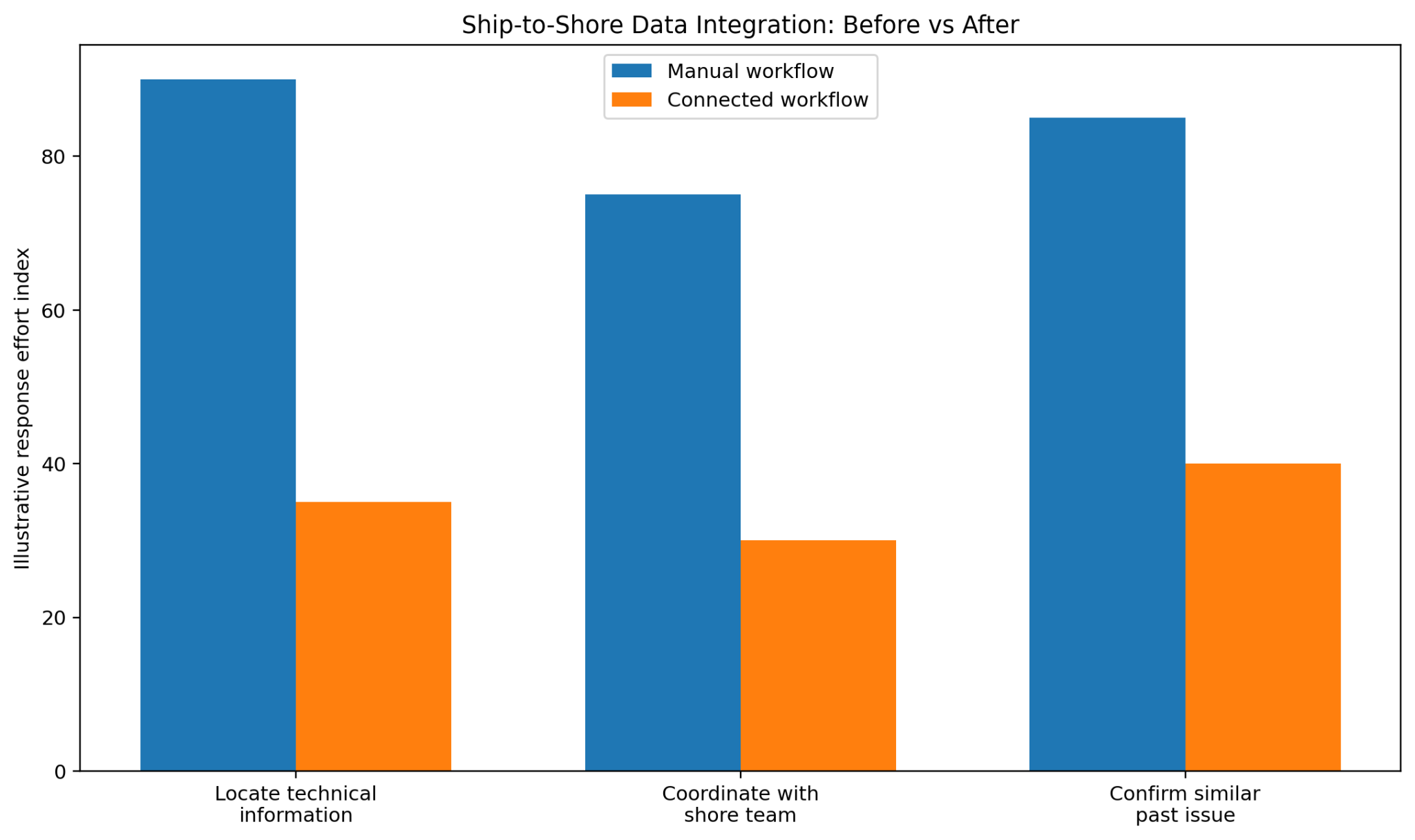
Source / Note: Illustrative graphic based on DNV’s maritime digitalization framework covering system integration, connectivity, automation, data management, cyber security, and data sharing. The chart values are illustrative, not taken from a published benchmark dataset.
AI in shipping becomes valuable when it is applied to specific operational problems. The strongest use cases today are technical search, anomaly detection, guided troubleshooting, and decision support. DNV’s digitalization view centers on improved monitoring, control, verification, and decision-making through connected data and digital systems.
For fleets, the advantage is simple: less time lost between signal and action. That is especially useful when teams already have the information somewhere, but cannot reach the right context quickly enough.
This is also where SmartSeas.AI fits naturally. It helps unify manuals, service letters, reports, and defect histories so vessel and shore teams can reach relevant technical context faster and work with more operational clarity.
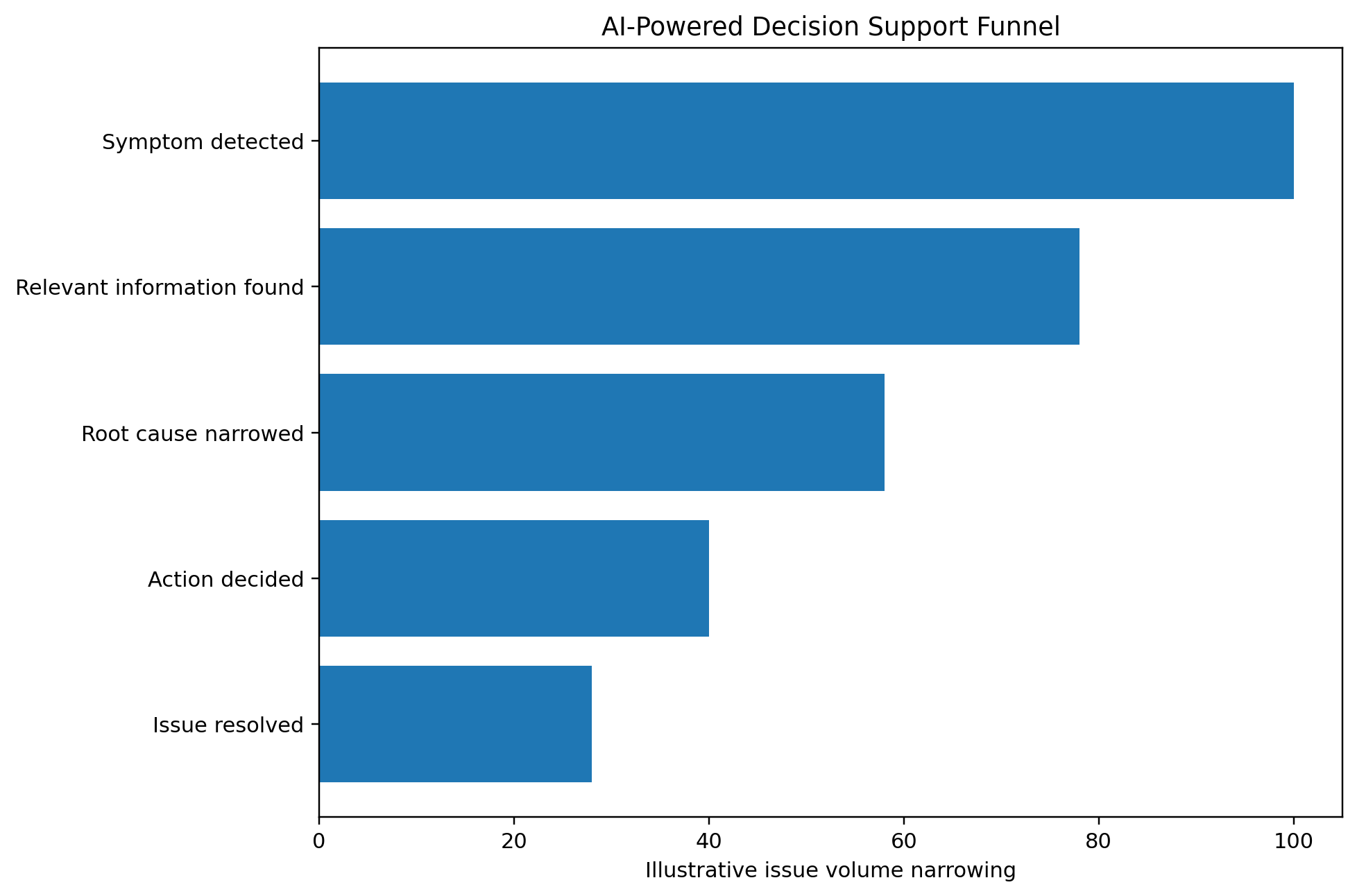
Source / Note: Illustrative graphic based on DNV’s view that maritime digitalization improves monitoring, control, verification, and decision-making. The funnel percentages are illustrative, not source data
Digital tools are increasingly important for fuel, voyage, and emissions management. IMO’s DCS framework already makes fuel data collection mandatory for large ships, and that data now supports CII calculations.
The advantage is better compliance and better efficiency management. Fleets need usable operational data not only to report performance, but to improve it.
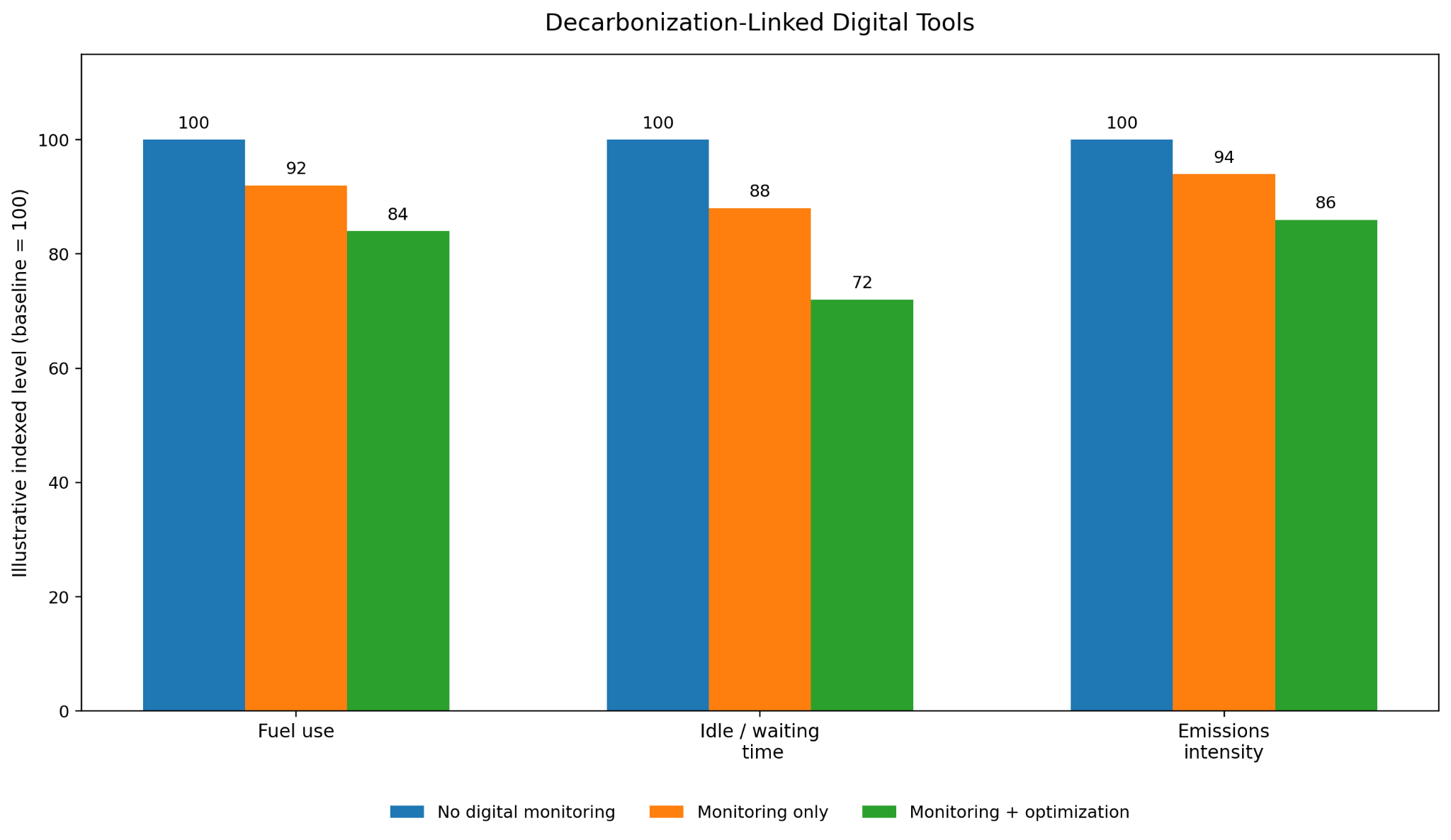
Source / Note: Illustrative indexed comparison based on IMO’s Data Collection System and CII framework, together with DNV’s view that digitalization supports efficiency and decarbonization. The bar values are illustrative, not taken from one published dataset.
Inspection and survey work is starting to use more remote methods. At MSC 110 in 2025, IMO approved draft amendments to allow the use of Remote Inspection Techniques such as drones, remotely operated vehicles, and crawlers for certain survey tasks.
IACS has also formalized remote classification surveys through UR Z29, which entered into force on 1 January 2023.
The advantage is quicker access, safer inspections in hard-to-reach spaces, and less delay in some survey workflows.
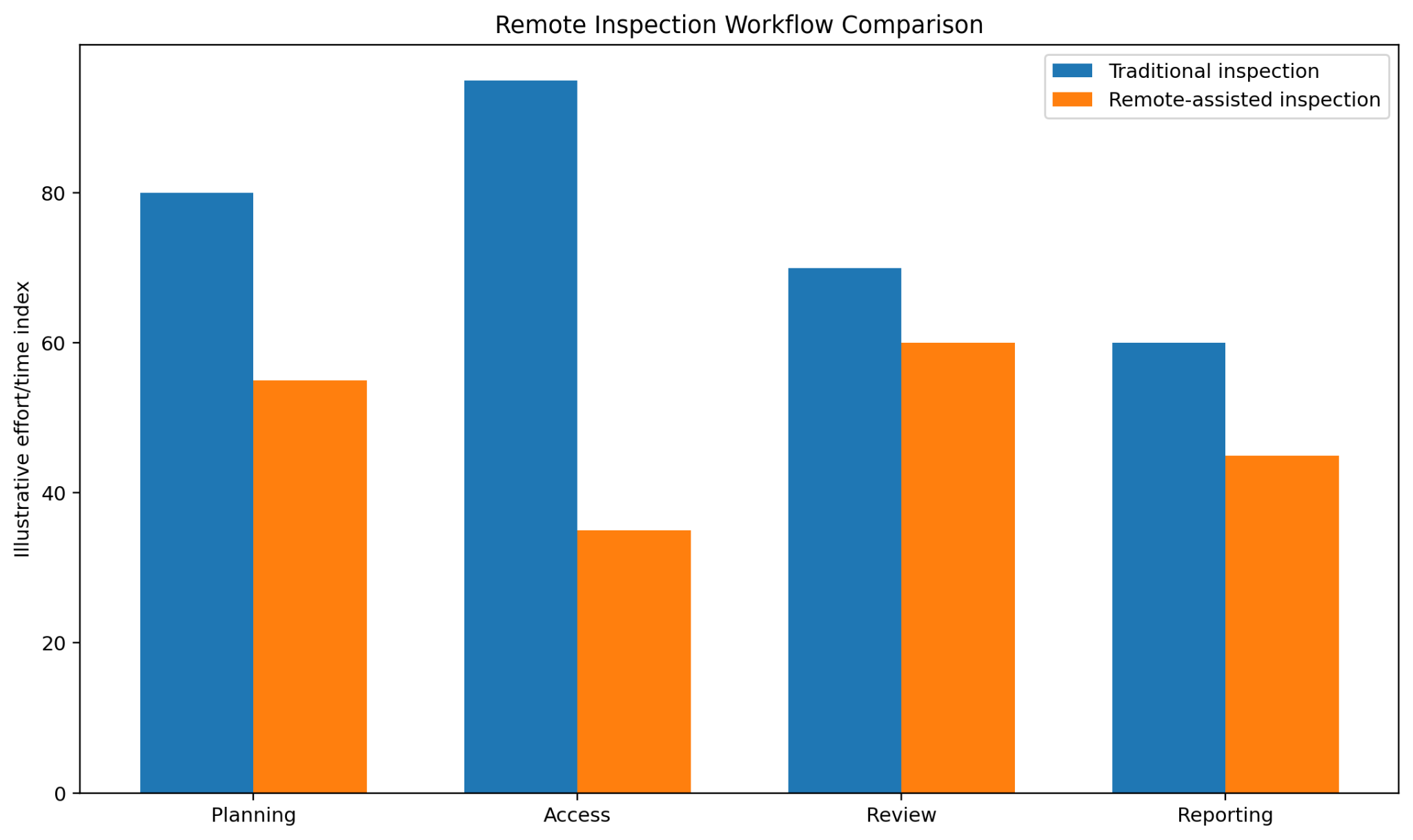
Source / Note: Illustrative process comparison based on IMO approval of Remote Inspection Techniques and IACS UR Z29 on Remote Classification Surveys. The timing/effort values shown in the chart are illustrative.
As shipping becomes more connected, cyber risk becomes more operational. IMO’s revised 2025 cyber risk guidance says greater reliance on digitalization, integration, automation, and network-based systems has increased the need for cyber risk management in shipping.
That means digital transformation now has to include cyber governance. Otherwise, fleets risk improving convenience while also increasing operational vulnerability.
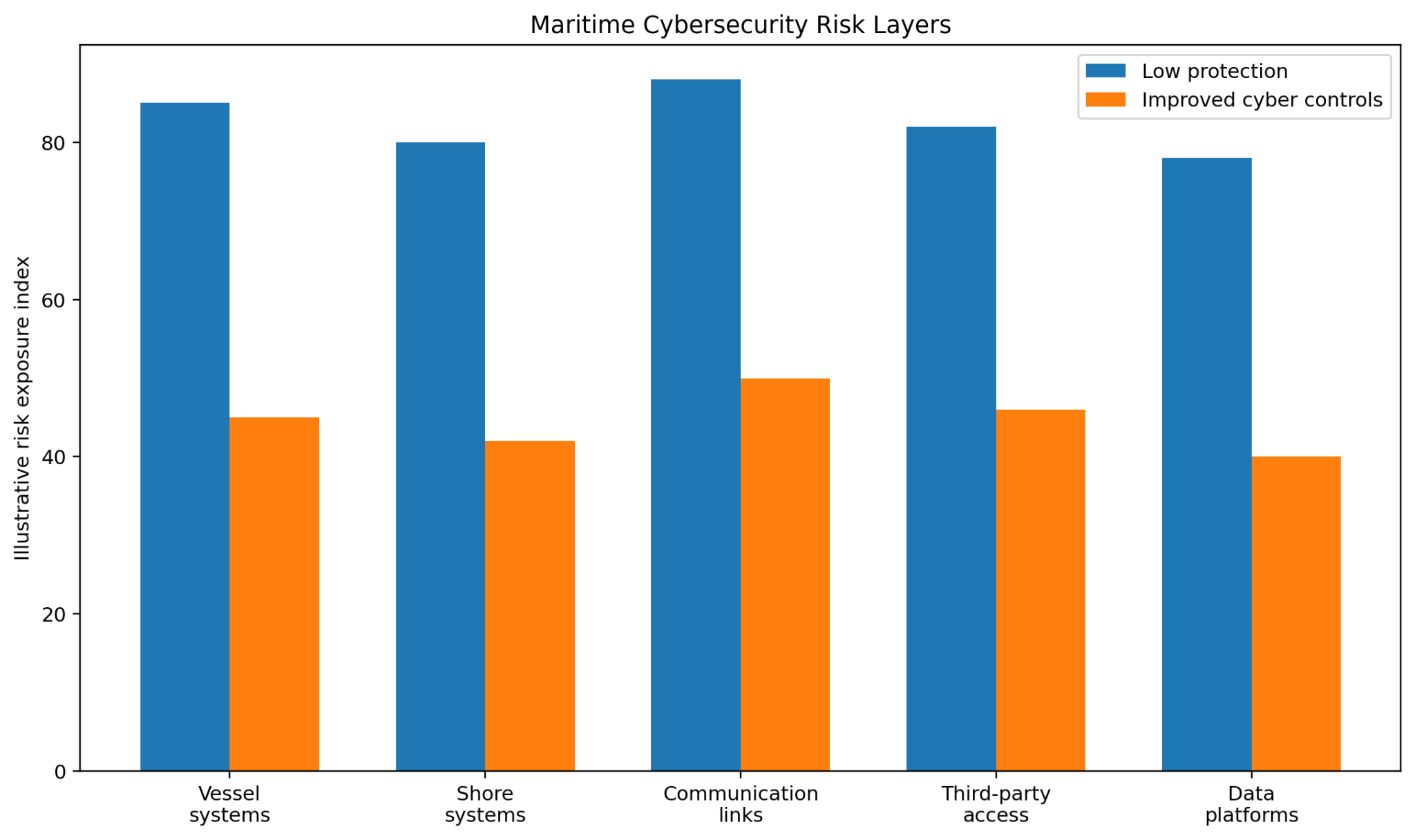
Source / Note: Illustrative graphic based on IMO’s Guidelines on Maritime Cyber Risk Management, which state that greater reliance on digitalization, integration, automation, and network-based systems increases the need for cyber risk management in shipping. The risk scores are illustrative.
Shipping is also moving toward more advanced digital operating models. At MSC 110, IMO continued work on the MASS roadmap, with the non-mandatory MASS Code targeted for adoption at MSC 111 in 2026 and the mandatory code targeted before 1 July 2030, with entry into force on 1 January 2032.
For most fleets, the point is not immediate autonomy. The point is readiness. Companies that strengthen data quality, connectivity, and workflows now will be better placed for the next phase of maritime operations.
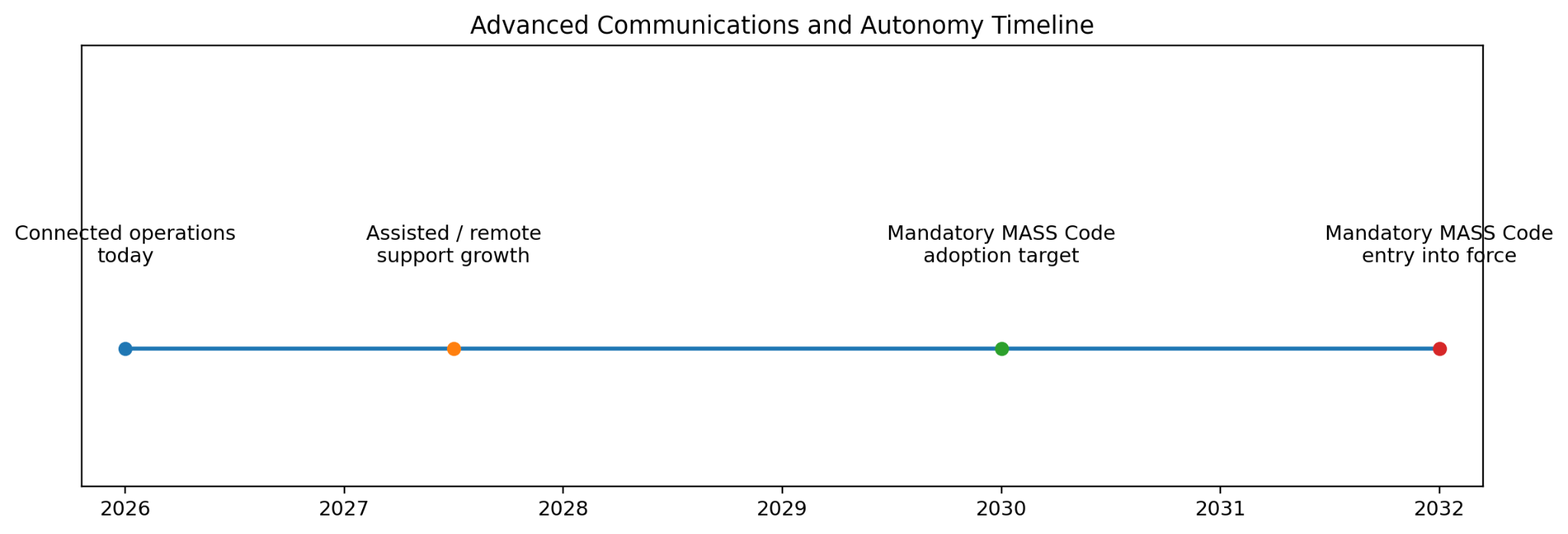
Source / Note: Based on IMO’s MASS roadmap. The milestones for mandatory MASS Code adoption by 1 July 2030 and entry into force on 1 January 2032 are source-based; the earlier “connected operations today” and “assisted / remote support growth” labels are interpretive timeline markers.
The maritime industry usually does not suffer from a lack of information. It suffers from delay in finding the right information.
Manuals, advisories, reports, and past defect histories may all exist. But when they are scattered across folders, emails, and disconnected systems, teams lose time searching instead of acting.
That is why some fleets still feel digitally slow even after adopting software. They may have reporting tools,but still depend on manual search during technical incidents. The gap is often not data collection. It is context retrieval.
This is where SmartSeas.AI becomes relevant. It helps bring together manuals, service letters, reports, defect histories, and technical knowledge into one searchable workflow for ship and shore teams.
That matters because digital transformation creates the most value when it improves a real operational decision. Faster troubleshooting, better ship-to-shore clarity, and reduced time spent hunting for technical context are all practical outcomes.
A good digital transformation program in shipping should start with one repeated problem. That could be port-call reporting, document flow, technical troubleshooting, emissions data handling, or survey preparation.
The next step is to improve information flow before adding more tools. In many maritime environments, fragmented data is a bigger problem than missing software.
Finally, connect the project to one measurable outcome. That could be turnaround time, troubleshooting time, document cycle time, repeat issue rate, or inspection preparation time. Digitalization works best when the operational value is visible.
Digital transformation still has risks. Fragmented deployment can create more tools without more clarity. Weak data governance can undermine automation and AI. Poor cyber discipline can make connected operations less safe.
That is why the best shipping digitalization programs are usually workflow-led. They start with an operational pain point, build cleaner information around it, and only then scale the digital layer.
Digital transformation in the shipping industry is not one trend. It is a combination of changes that are reshaping maritime operations: port-call digitalization, electronic documentation, ship-to-shore data integration, AI-powered decision support, better emissions data, remote inspections, stronger cyber resilience, and a clearer path toward advanced digital operations.
For maritime operators, the opportunity is not to become digital for its own sake. It is to become easier to run, faster to respond, and better informed under pressure.
For fleets focused on troubleshooting, operational clarity, and faster decision-making, SmartSeas.AI fits this shift in a practical way by turning scattered technical information into usable operational context.
CTA: The best place to start digital transformation is usually the workflow where time is lost before the first correct action.
It is the shift from manual, fragmented maritime workflows to connected, data-driven workflows across ports, ships, shore offices, documentation, compliance, and technical operations.
Because shipping companies are under pressure to improve efficiency, meet emissions-related data requirements, manage cyber risk, and work with faster, more connected operations.
The biggest trends are port-call digitalization, electronic documentation, ship-to-shore data integration, AI-assisted decisions, decarbonization-linked digital tools, remote inspections, cyber security, and more advanced communications and autonomy frameworks.
AI is most useful when it speeds up search, troubleshooting, anomaly detection, and decision support. In maritime operations, that usually means shortening the time between a problem signal and the next correct action.
It is a single digital platform used for exchanging port-call information related to a ship’s arrival, stay, and departure. IMO made it compulsory from 1 January 2024.
It is still growing, but the direction is clear. DCSA’s member carriers set milestone commitments in 2023 to expand digital original bills of lading through 2030.
Because connected systems increase operational exposure. IMO’s 2025 cyber guidance explicitly links digitalization and automation with the need for stronger cyber risk management.
SmartSeas.AI fits where fleets want digital transformation to improve real decisions, especially technical troubleshooting, knowledge access, ship-to-shore visibility, and faster operational response.

Get Started Today
Transform the way you troubleshoot and manage maritime operations. Join the next wave of Maritime Digital Transformation with SmartSeas AI.




.svg)